Aratta – Sivilisasjonens vugge

En blogg om vår sivilisasjons tilblivelse og utvikling

The World of Today

Skrevet av Fredsvenn den mai 18, 2013

Publisert i Uncategorized | Legg igjen en kommentar »

The Ancestor of the Germans – Herman/Armen

Skrevet av Fredsvenn den mai 18, 2013

The ancestor of the Irminones [i.e. same as Herminones] – Armenon. The ancestry of the Herminones was in a god, Mannus, identified as the Mannae Armenians claimed to be depicted by the god, Manes. The Thuringians are thought to be mainly of Anglian stock from what is now lower Denmark.” With the Angles and the Thuringians in mind at once, the Bagratid god, Angl-Thork, definitely comes to mind.

MEROPS TO MEROVEE

The Bagratids of Armenia are speculated to have been an offshoot of the Orontid Dynasty, kings of Armenia (c 400 – c 200 BC). They had their original appanage in Bagrevand in historic north-central Armenia and claimed their descent from a solar deity Angl-Thork, the tutelary god of the Orontids, until their conversion to Christianity. Thereafter, this claim was abandoned in favor of the mythical ancestor of the Armenians, Hayk.

Later, under biblical influences, they entertained another claim, of Hebrew ancestry, further elaborated by Moses of Khorene as the well-known myth of their descent from the biblical king-prophet David. Once the Georgian branch, who had quickly acculturated in the new environment, assumed royal power, the myth of their biblical origin helped to assert their legitimacy and emerged as a main ideological pillar of the millennium-long Bagrationi rule in Georgia from 575 AD to 1810 AD.

The claim is given no credence by modern scholarship. The harp on their Coat of Arms is a reference that ancestry.

Irmin may be:

Irmin

Old Saxon irmin “strong, whole”, maybe also “strong, tall, exalted” (Old High German ermen, Old Norse jǫrmun, Old English Eormen), from Proto-Germanic *erminaz, *ermenaz or *ermunaz, in personal names (Armin, Ermanaric, Ermenbald, Ermenbert, Ermenfried, Ermenhard, Ermelinda, Erminia, Ermintrude, Emma)

Irmin

Irminones

The Irminones, also referred to as Herminones or Hermiones, were a group of early Germanic tribes settling in the Elbe watershed and by the 1st century AD expanding into Bavaria, Swabia and Bohemia. Irminonic or Elbe Germanic is a conventional term grouping early West Germanic dialects ancestral to High German.

The name Irminones or Hermiones comes from Tacitus’s Germania (98 AD) who categorized them as one of the tribes of descended from Mannus, and noted that they lived in the interior of Germany. Other Germanic groups of tribes were the Ingvaeones, living on the coast, and Istvaeones, who account for the rest.[2] Tacitus also mentions the Suebi, as a large grouping which include the Semnones, the Quadi and the Marcomanni, but he does not say precisely which (if any) of the three nations they belong to.

Pomponius Mela writes in his Description of the World (III.3.31) in reference to the Kattegat and the waters surrounding the Danish isles (see the Codanus sinus): “On the bay are the Cimbri and the Teutoni; farther on, the farthest people of Germania, the Hermiones.” Mela then begins to speak of the Scythians.

Pliny’s Natural History (4.100) claims that the Irminones include the Suebi, Hermunduri, Chatti, and Cherusci.

In Nennius the name Mannus (see Mannaz) and his three sons appear in corrupted form, the ancestor of the Irminones appearing as Armenon. His sons here are Gothus, Valagothus/Balagothus, Cibidus, Burgundus, and Longobardus, whence come the Goths (and Ostrogoths, Visigoths, Crimean Goths), Valagoths/Balagoths, Cibidi, Burgundians and Lombards (Langobards).

They may have differentiated into the tribes Alamanni, Hermunduri, Marcomanni, Quadi, Suebi by the 1st century AD. At this time the Suebi, Marcomanni and Quadi had moved southwest into the area of modern day Bavaria and Swabia. In 8 BC, the Marcomanni and Quadi drove the Boii out of Bohemia.

The term Suebi is usually applied to all the groups that moved into this area, though later in history (c. 200 AD) the term Alamanni (meaning “all-men”) became more commonly applied to the group.

Jǫrmun, the Viking Age Norse form of the name Irmin, can be found in a number of places in the Poetic Edda as a by name for Odin. This pans with both the historical circumstances of the Irminones in relationship to Rome, Widukind’s confusion over whether Irmin was comparable to Mars or Hermes, and with Snorri Sturluson’s allusions at the beginning of his Prose Edda; that Odin’s cult appeared first in Germany and then spread up into the Ingaevonic North.

Irminones

Irminenschaft

Irminenschaft (or, Irminism, Irminenreligion) is a current of Ariosophy based on a Germanic deity Irmin which is supposedly reconstructed from literaric, linguistic and oonomastic sources. Among other sources the Prefix “Irmin” is well documented in the from Irminsul “great pillar that supports all”/”Columna Universalis Sustenans Omni”, as described in Einhards ‘Vita Karoli Magni’, and informed by Tacitus (~1st century) via a mentioned Germanic tribe name of Hermiones; The Old Saxon adjective irmin being synonymous to “great, strong”. As such it may also have been an epithet of later deities like Ziu (Týr) or Wodan (Odin)). Purported evidence also stems from the occurrence of the word “Irmingot”, found in the Old High German “Hildebrandslied”. Notably the Nazi occultist Karl Maria Wiligut claimed a historical Irminism, established in 12,500 BC, later ousted by Wotanism.

Irminenschaft

Irminsul

An Irminsul (Old Saxon, probably “great/mighty pillar” or “arising pillar”) was a kind of pillar which is attested as playing an important role in the Germanic paganism of the Saxon people. The oldest chronicle describing an Irminsul refers to it as a tree trunk erected in the open air. The purpose of the Irminsuls and the implications thereof have been the subject of considerable scholarly discourse and speculation for hundreds of years.

A Germanic god Irmin, inferred from the name Irminsul and the tribal name Irminones, is sometimes presumed to have been the national god or demi-god of the Saxons. It has been suggested that Irmin was more probably an aspect or epithet of some other deity – most likely Wodan (Odin). Irmin might also have been an epithet of the god Ziu (Tyr) in early Germanic times, only later transferred to Odin, as certain scholars subscribe to the idea that Odin replaced Tyr as the chief Germanic deity at the onset of the Migration Period. This was the favored view of early 20th century Nordicist writers, but it is not generally considered likely in modern times.

The Old Norse form of Irmin is Jörmunr, which just like Yggr was one of the names of Odin. Yggdrasil (“Yggr’s horse”) was the yew or ash tree from which Odin sacrificed himself, and which connected the nine worlds. Jakob Grimm connects the name Irmin with Old Norse terms like iörmungrund (“great ground”, i.e. the Earth) or iörmungandr (“great snake”, i.e. the Midgard serpent).

Irminsul

Armin is a given name or surname, and is:

Armin

Decem and Taihun

In 1981, Hopper proposed to divide all Indo-European languages into Decem and Taihun groups, according to the pronunciation of the numeral ’10′, by analogy with the Centum-Satem isogloss, which is based on the pronunciation of the numeral ’100′. The Armenian, Germanic, Anatolian, and Tocharian subfamilies belong to the Taihun group because the numeral ’10′ begins from the voiceless t there. All other Indo-European languages belong to the Decem group because the numeral 10 begins from the voiced d in them. The question then can be framed as which, if either, of these groups reflects the original state of things, and which is an innovation.

Glottalic theory

Armenian hypothesis

The Armenian hypothesis of the Proto-Indo-European Homeland, based on the Glottalic theory suggests that the Proto-Indo-European language was spoken during the 4th millennium BC in the Armenian Highland. It is an Indo-Hittite model and does not include the Anatolian languages in its scenario. The phonological peculiarities proposed in the Glottalic theory would be best preserved in the Armenian language and the Germanic languages, the former assuming the role of the dialect which remained in situ, implied to be particularly archaic in spite of its late attestation.

The Proto-Greek language would be practically equivalent to Mycenaean Greek and date to the 17th century BC, closely associating Greek migration to Greece with the Indo-Aryan migration to India at about the same time (viz., Indo-European expansion at the transition to the Late Bronze Age, including the possibility of Indo-European Kassites).

Armenian hypothesis

Swastika – Tao

The Tocharians, an indoeuropean group which doesn’t any longer exists, went from their homeland in Caucasus to China for around 5.000 years ago. They opened the Silk road, and introduced both Taosism and copper. They spread Buddhism, but also Taoism, which is two local variations of our religion. Both of these religions use the Swastika, which is a persian word and means well-being. It is about living in peace with your self and in harmony with rest of the universe.

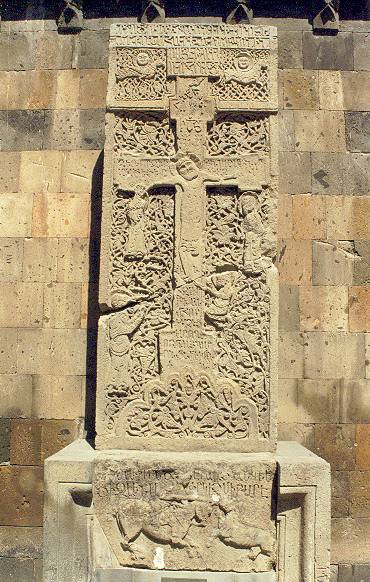
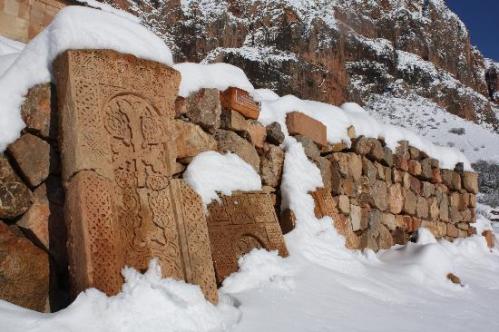
In Armenia swastika is called “vardan“, “arevakhach” and “ker khach” and is the ancient symbol of eternal light (i.e. God). Swastikas in Armenia were founded on petroglyphs. Among the oldest petroglyphs is the seventh letter of the Armenian alphabet – “E” (which means “is” or “to be”) – depicted as half-swastika. Swastikas can also be seen on early Medieval churches and fortresses, including the principal tower in Armenia’s historical capital city of Ani. The same symbol can be found on Armenian carpets, cross-stones (khachkar) and in medieval manuscripts.

The world oldest swastika was found from a burial site of a hunting culture, worlds earliest temple Gobekli Tepe was created by non-porcelain, non-agricultural hunter gatherer people, likely also nomadic. However the earlist porcelain and agricultural people did not creat meaningful symbols or temples, implying the agricultural people lacked organizational trait. The hunter gatherers, later to become the first agroculturalists, from Near East, especially Anatolia, the Armenian Highland, were the first nomads, they are the root of world civilization. These people are still around, some migrated to Europe, settling in Africa, Europe and Asia, mixing with locals there. The descendents of nomadic heritage can be proud of it.

The archeological founds in the Halaf culture in the Armenian Highland shares similarities with Indian ones. The Mitanni language, which is a very archaic Indo-Iranian language (older and more archaic than old Avestan and Rigvedic and which according to Indo-European linguists forms a fifth independant Indo-Iranian group – oldest swastika( 6000-5000 B.C) in a Hurrian city. In fact the Hurrians and the Aryans (Armenians) established Mitanni, later Ur-Ar-at (Ararat) and then Armenia. While the Aryans became Armenians, the Hurrians became the Kurds (Iranian speaking).

“There may have been later “Taoists”, or interpreters of Taoism, that thought differently, but they do not conform to the teachings of Lao Tzu, and K’ung-fu-tzu and the other authors of the I Ching. The Tao is the same as God, the God of Abraham, Isaac, Jacob, and Jesus although the ancient Chinese sages did not know of these individuals. The brilliance of Taoism is the way that they conceived of God, which is not contrary to the Bible, but complementary to it. And yes, God is everything. There is only one Substance out of which everything is made, including thought, and it is called the Tao, or God.”

The earliest Swastika known has been found from Mezine, Ukraine. It is carved on late paleolithic figurine of mammoth ivory, being dated as early as about 10,000 BC. It has been suggested this Swastika is a stylized picture of a stork in flight. Aragil or Stork – considered as the messenger of Ara the Beautiful, as well as the defender of fields. According to ancient mythological conceptions, two stork symbolize the sun. Ara ‘Ara the Beautiful’is the god of spring, flora, agriculture, sowing and water. He is associated with Osiris, Vishnu and Dionysus, as the symbol of new life.

Pharaoh Thutmose III of Egypt in the 33rd year of his reign (1446 BC) mention the people of Ermenen, and says in their land “heaven rests upon its four pillars”.

Tocharian

Phonetically, Tocharian is a “centum” Indo-European language, meaning that it merges the palatovelar consonants (*ḱ, *ǵ, *ǵʰ) of Proto Indo-European with the plain velars (*k, *g, *gʰ). Centum languages are mostly found in western and southern Europe (Greek, Italic, Celtic, Germanic). In that sense, Tocharian (to some extent like the Greek and the Anatolian languages) seems to have been an isolate in the “satem” (i.e. palatovelar to sibilant) phonetic regions of Indo-European-speaking populations. The discovery of Tocharian contributed to doubts that Proto-Indo-European had originally split into western and eastern branches.

Tocharians

Tocharian languages

Tarim mummies

Dienekes’ Anthropology Blog: On Tocharian origins

Haplogroup R1b

R1b is the most common haplogroup in Western Europe, reaching over 80% of the population in Ireland, the Scottish Highlands, western Wales, the Atlantic fringe of France and the Basque country. It is also common in Anatolia and around the Caucasus, in parts of Russia and in Central and South Asia. Besides the Atlantic and North Sea coast of Europe, hotspots include the Po valley in north-central Italy (over 70%), the Ossetians of the North Caucasus (over 40%) and nearby Armenia (35%), the Bashkirs of the Urals region of Russia (50%), Turkmenistan (over 35%), the Hazara people of Afghanistan (35%), the Uyghurs of North-West China (20%) and the Newars of Nepal (11%). R1b-V88, a subclade specific to sub-Saharan Africa, is found in 60 to 95% of men in northern Cameroon.

The origins of R1b are not entirely clear to this day. Some of the oldest forms of R1b are found in the Near East and around the Caucasus. Haplogroup R1* and R2* might have originated in southern Central Asia (between the Caspian and the Hindu Kush). A branch of R1 would have developed into R1b* then R1b1* in the northern part of the Middle East around the time of the Last Glacial Maximum (circa 20,000 years ago). It presumptively moved to northern Anatolia and across the Caucasus during the early Neolithic, where it became R1b1b. The Near Eastern leftovers evolved into R1b1a (M18), now found at low frequencies among the Lebanese and the Druze.The Phoenicians (who came from modern day Lebanon) spread this R1b1a and R1b1* to their colonies, notably Sardinia and the Maghreb.

The subclades R1b1b1 and R1b1b2 (the most common form in Europe) are closely associated with the spread of Indo-European languages, as attested by its presence in all regions of the world where Indo-European languages were spoken in ancient times, from the Atlantic coast of Europe to the Indian subcontinent, including almost all Europe (except Finland and Bosnia-Herzegovina), Anatolia, Armenia, Europan Russia, southern Siberia, many pockets around Central Asia (notably Xinjiang, Turkmenistan, Tajikistan and Afghanistan), without forgetting Iran, Pakistan, India and Nepal. The history of R1b and R1a are intricately connected to each others. Whereas R1b1 is found is such places as the Levant or Cameroon, R1b1b mostly likely originated in north-eastern Anatolia.

Haplogroup R1b

Haplogroup R1a

Haplogroup R1a probably branched off from R1* around the time of the Last Glacial Maximum (19,000 to 26,000 years before present). Little is know for certain about its place of origin. Some think it might have originated in the Balkans or around Pakistan and Northwest India, due to the greater genetic diversity found in these regions. The diversity can be explained by other factors though. The Balkans have been subject to 5000 years of migrations from the Eurasian Steppes, each bringing new varieties of R1a. South Asia has had a much bigger population than any other parts of the world (occasionally equalled by China) for at least 10,000 years, and larger population bring about more genetic diversity. The most likely place of origin of R1a is Central Asia or southern Russia/Siberia.

R1a is thought to have been the dominant haplogroup among the northern and eastern Proto-Indo-European language speakers, that evolved into the Indo-Iranian, Thracian, Baltic and Slavic branches. The Proto-Indo-Europeans originated in the Yamna culture (3300-2500 BCE). Their expansion is linked to an early adoption of bronze weapons, the domestication of the horse in the Eurasian steppes and the invention of the chariot. The southern Steppe culture is believed to have carried predominantly R1b1b lineages, while the northern Forest-Steppe culture would have been essentially R1a-dominant. The first expansion of the Forest-Steppe people occured with the Corded Ware Culture (see Germanic branch below). The migration of the R1b people to Central and Western Europe left a vacuum for R1a people in the southern steppe around the time of the Catacomb culture (2800-2200 BCE). The Forest-Steppe origin of this culture is obvious from the introduction of corded pottery and the abundant use of polished battle axes, the two most prominent features of the Corded Ware culture. This is also probably when the satemisation process of the Indo-European languages began since the Balto-Slavic and Indo-Iranian language groups belong to the same Satem isogloss and both appear to have evolved from the the Catacomb culture.

Ancient DNA testing has confirmed the presence of haplogroup R1a1a in samples from the Corded Ware culture in Germany (2600 BCE), from Tocharian mummies (2000 BCE) in Northwest China, from Kurgan burials (circa 1600 BCE) from the Andronovo culture in southern Russia and southern Siberia, as well as from a variety of Iron-age sites from Russia, Siberia, Mongolia and Central Asia.

Haplogroup R1a1a

Ancient DNA testing has confirmed the presence of haplogroup R1a1a in samples from the Corded Ware culture in Germany (2600 BCE), from Tocharian mummies (2000 BCE) in Northwest China, from Kurgan burials (circa 1600 BCE) from the Andronovo culture in southern Russia and southern Siberia, as well as from a variety of Iron-age sites from Russia, Siberia, Mongolia and Central Asia.

The first expansion of R1a took place with the westward propagation of the Corded Ware (or Battle Axe) culture (3200-1800 BCE) from the Yamna homeland. This was the first wave of R1a into Europe, one that is responsible for the presence of this haplogroup in Scandinavia, Germany, and a portion of the R1a in the Czech Republic, Slovakia, Hungary or Poland. The high prevalence of R1a in Balto-Slavic countries nowadays is not only due to the Corded Ware expansion, but also to a long succession of later migrations from Russia, the last of which took place from the 5th to the 1th century CE.

The Germanic branch of Indo-European languages probably evolved from a merger of Corded-Ware R1a (Proto-Slavic language) and the later arrival of Italo-Celtic R1b from Central Europe. This is supported by the fact that Germanic people are hybrid R1a-R1b, that these two haplogroups came via separate routes at different times, and also on the linguistics of Proto-Germanic language, which shares similarities with Italic, Celtic and Slavic languages. The Corded Ware R1a people would have mixed with the pre-Germanic I1 aborigines to create the Nordic Bronze Age (1800-500 BCE). R1b presumably reached Scandinavia later as a northward migration from the contemporary Hallstatt culture (1200-500 BCE).

The first genuine Germanic tongue has been estimated by linguists to have come into existence around (or after) 500 BCE. This would confirm that it emerged as a blend of Hallstatt Proto-Celtic and the Corded-Ware Proto-Slavic. The uniqueness of some of the Germanic vocabulary points at borrowing from native pre-Indo-European languages. Celtic language itself is known to have borrowed from Afro-Asiatic languages spoken by Near-Eastern immigrants to Central Europe.

The fact that present-day Scandinavia is composed of roughly 40% of I1, 20% of R1a and 40% of R1b reinforces the idea that Germanic ethnicity and language had acquired a tri-hybrid character by the Iron Age.

Haplogroup R1a1a

Publisert i Uncategorized | Legg igjen en kommentar »

Attis – Jesus

Skrevet av Fredsvenn den mai 18, 2013

File:Mithra sacrifiant le Taureau-005.JPG

Mithra

File:Attis thymiaterion Louvre Tarse61.jpg

Attis wearing the Phrygian cap.

Terracotta thymiaterion from Tarsus (Louvre).

File:Bust Attis CdM.jpg

Attis

Attis: Born of a Virgin on December 25th, Crucified and Resurrected

Was the story of Jesus stolen from the pagan hero Attis?

Investigating the Similarities between Jesus and Pagan Figures

Attis was the consort of Cybele in Phrygian and Greek mythology. His priests were eunuchs, the Galli, as explained by origin myths pertaining to Attis and castration. Attis was also a Phrygian god of vegetation, and in his self-mutilation, death, and resurrection he represents the fruits of the earth, which die in winter only to rise again in the spring.

Some authors say, that the Christian religion partly origins from the Attis cult. To support this view, they see a number of parallels, as listed below.

Attis (a deity or semi-deity in the ancient Greek culture) is known to be worshipped between 500 B.C. and 400 A.C., first in Phrygia and eventually even in Rome. During this period, the legend of Attis has taken many forms, which makes it hard to comment on the parallels. It is hard to determine which version of the legend was most popular at the time when and the place where Christianity emerged.

  1. Jesus and Attis were both born from a virgin.
    > One difference is, though, that Jesus’s mother was human while Attis’s mother Nana was a nymph. Further, Maria got pregnant by the Holy Spirit and Nana got pregnant by an almond from a daemon. Another version of the legend tells that the goddess Cybele (not a virgin) was his mother.
  2. Jesus and Attis both died a violent death.
    > Jesus was crucified and Attis killed himself, or, in an old Lydian version of the story, was killed by a boar.
  3. Jesus and Attis both resurrected from the death.
    > According to some versions, Attis was reborn as the evergreen pine, in another version, he just disappeared and in yet other versions, he was indeed resurrected by either Zeus or Cybele. The resurrection played an important role in the Roman cult in the first century. This may be influenced by Christianity.
  4. The Attis cult included that the worshippers had a meal, that symbolized the body of Attis, just like the Holy Communion of the Christians.
    > They did have a meal, but there is no evidence that this symbolized the body of Attis. Furthermore, this meal was part of an extensive yearly ritual, while in the first century the christian communion was held separately and frequently, although the exact frequency is not known.

Attis of Phrygia offers the following similarities to Jesus, according to some critics:

  1. Attis was born on December 25th of the Virgin Nana.
  2. He was considered the savior who was slain for the salvation of mankind.
  3. His body as bread was eaten by his worshippers.
  4. His priests were “eunuchs for the kingdom of heaven.”
  5. He was both the Divine Son and the Father.
  6. On “Black Friday,” he was crucified on a tree, from which his holy blood ran down to redeem the earth.
  7. He descended into the underworld.
  8. After three days, Attis was resurrected on March 25th (as tradition held of Jesus) as the “Most High God.”
  9. Attis was represented as a “a man tied to a tree, at the foot of which was a lamb, and, without doubt also as a man nailed to a tree…”
  10. On March 22nd, a pine tree was felled and “an effigy of the god was affixed to it, thus being slain and hung on a tree…” Later the priests are supposed to have found Attis’ grave empty.

Publisert i Uncategorized | Legg igjen en kommentar »

The Armenian hypothesis of the Proto-Indo-European Homeland

Skrevet av Fredsvenn den mai 17, 2013

The Armenian hypothesis of the Proto-Indo-European Homeland, based on the Glottalic theory suggests that the Proto-Indo-European language was spoken during the 4th millennium BC in the Armenian Highland. It is an Indo-Hittite model and does not include the Anatolian languages in its scenario.

The phonological peculiarities proposed in the Glottalic theory would be best preserved in the Armenian language and the Germanic languages, the former assuming the role of the dialect which remained in situ, implied to be particularly archaic in spite of its late attestation.

The Proto-Greek language would be practically equivalent to Mycenaean Greek and date to the 17th century BC, closely associating Greek migration to Greece with the Indo-Aryan migration to India at about the same time (viz., Indo-European expansion at the transition to the Late Bronze Age, including the possibility of Indo-European Kassites).

The Armenian hypothesis argues for the latest possible date of Proto-Indo-European (sans Anatolian), roughly a millennium later than the mainstream Kurgan hypothesis. In this, it figures as an opposite to the Anatolian hypothesis, in spite of the geographical proximity of the respective suggested Urheimaten, diverging from the timeframe suggested there by as much as three millennia.

Shulaveri-Shomu culture is a Late Neolithic/Eneolithic culture that existed on the territory of present-day Georgia, Azerbaijan and the Armenian Highlands. It is thought to be a critical element in identifying the origins of both the Georgian and Armenian peoples. The culture is dated to mid-6th or early-5th millennia BC and is thought to be one of the earliest known Neolithic cultures. The Shulaveri-Shomu culture begins after the 8.2 kiloyear event which was a sudden decrease in global temperatures starting ca. 6200 BC and which lasted for about two to four centuries.

Shulaveri culture predates the Kura-Araxes culture and surrounding areas, which is assigned to the period of ca. 4000 – 2200 BC, and had close relation with the middle Bronze Age culture called Trialeti culture (ca. 3000 – 1500 BC). Sioni culture of Eastern Georgia possibly represents a transition from the Shulaveri to the Kura-Arax cultural complex.

In around ca. 6000–4200 B.C the Shulaveri-Shomu and other Neolithic/Chalcolithic cultures of the Southern Caucasus use local obsidian for tools, raise animals such as cattle and pigs, and grow crops, including grapes. Many of the characteristic traits of the Shulaverian material culture (circular mudbrick architecture, pottery decorated by plastic design, anthropomorphic female figurines, obsidian industry with an emphasys on production of long prismatic blades) are believed to have their origin in the Near Eastern Neolithic (Hassuna, Halaf).

The Kura–Araxes culture or the early trans-Caucasian culture, was a civilization that existed from 3400 BC until about 2000 BC, which has traditionally been regarded as the date of its end, but it may have disappeared as early as 2600 or 2700 BC.

The earliest evidence for this culture is found on the Ararat plain; thence it spread to Georgia by 3000 BC (but never reaching Colchis), and during the next millennium it proceeded westward to the Erzurum plain, southwest to Cilicia, and to the southeast into an area below the Urmia basin and Lake Van, and finally down to the borders of present day Syria. Altogether, the early Trans-Caucasian culture, at its greatest spread, enveloped a vast area approximately 1,000 km by 500 km.

The name of the culture is derived from the Kura and Araxes river valleys. Its territory corresponds to parts of modern Armenia, Georgia, Azerbaijan, Chechnya, Dagestan, Ingushetia and North Ossetia. It may have given rise to the later Khirbet Kerak ware culture found in Syria and Canaan after the fall of the Akkadian Empire.

Inhumation practices are mixed. Flat graves are found, but so are substantial kurgan burials, the latter of which may be surrounded by cromlechs. This points to a heterogeneous ethno-linguistic population. Late in the history of this culture, its people built kurgans of greatly varying sizes, containing greatly varying amounts and types of metalwork, with larger, wealthier kurgans surrounded by smaller kurgans containing less wealth. This trend suggests the eventual emergence of a marked social hierarchy. Their practice of storing relatively great wealth in burial kurgans was probably a cultural influence from the more ancient civilizations of the Fertile Crescent to the south.

Hurrian and Urartian elements are quite probable, as are Northeast Caucasian ones. Some authors subsume Hurrians and Urartians under Northeast Caucasian as well as part of the Alarodian theory. The presence of Kartvelian languages was also highly probable. Influences of Semitic languages and Indo-European languages are also highly possible, though the presence of the languages on the lands of the Kura–Araxes culture is more controversial.

Jump to: navigation, search
The approximate area of Hurrian settlement in the Middle Bronze Age is shown in purple.

The Hurrians (cuneiform Ḫu-ur-ri) were an ancient people, who spoke a Hurro-Urartian language of the Ancient Near East, living in Anatolia and Northern Mesopotamia during the Bronze Age. The largest and most influential partly Hurrian nation was the kingdom of Mitanni, though the Mitanni were an Indo-European speaking people who formed a ruling class over the Hurrians.

According to a hypothesis by I.M. Diakonoff and S. Starostin, the Hurrian, Hattic, and Urartian languages are related to the Northeast Caucasian languages.

The population of the Indo-European speaking Hittite Empire in Anatolia to a large part consisted of Hurrians and Hattians, but by the Early Iron Age, the Hurrians had been assimilated with other peoples, except perhaps in the kingdom of Urartu.

Urartu, corresponding to Kingdom of Ararat or Kingdom of Van (Urartian: Biai, Biainili), was a prehistoric Iron Age Armenian kingdom centred around Lake Van in the Armenian Highlands.

Strictly speaking, Urartu is the Assyrian term for a geographical region, while “kingdom of Urartu” or “Biainili lands” are terms used in modern historiography for the Iron Age state that arose in that region. Prior to the 8th century BC, they also called their now united kingdom “Nairi”.

Scholars such as Carl Friedrich Lehmann-Haupt (1910) believed that the people of Urartu called themselves Khaldini after their god Khaldi. The kingdom’s native name was Biainili, also spelt Biaineli, (from which is derived the Armenian toponym “Van”), but the Nairi, an Iron Age people of the Van area, are sometimes considered related or identical.

The landscape corresponds to the mountainous plateau between Asia Minor, Mesopotamia, and the Caucasus mountains, later known as the Armenian Highlands.

In the early 6th century BC, the Urartian Kingdom was replaced by the Armenian Orontid dynasty. In the trilingual Behistun inscription, carved in 521/0 BC by the order of Darius the Great of Persia, the country referred to as Urartu in Assyrian is called Arminiya in Old Persian and Harminuia in Elamite.

The Assyrian King Shalmaneser I (1263–1234 BC) recorded a campaign in which he subdued the entire territory of “Uruatri”. The Shalmaneser text uses the name Urartu to refer to a geographical region, not a kingdom, and names eight “lands” contained within Urartu (which at the time of the campaign were still disunited).

Shubria was part of the Urartu confederation. Later, there is reference to a district in the area called Arme or Urme, which some scholars have linked to the name Armenia.

The Kura–Araxes culture is closely linked to the approximately contemporaneous Maykop (also spelled Maikop) culture of Transcaucasia. The Maykop culture , ca. 3700 BC—2500 BC, was a major Bronze Age archaeological culture in the Western Caucasus region of Southern Russia. It extends along the area from the Taman Peninsula at the Kerch Strait to near the modern border of Dagestan and southwards to the Kura River. The culture takes its name from a royal burial found in Maykop in the Kuban River valley.

As Amjad Jaimoukha puts it: “The Kura-Araxes culture was contiguous, and had mutual influences, with the Maikop culture in the Northwest Caucasus. According to E.I.Krupnov (1969:77), there were elements of the Maikop culture in the early memorials of Chechnya and Ingushetia in the Meken and Bamut kurgans and in Lugovoe in Serzhen-Yurt. Similarities between some features and objects of the Maikop and Kura-Araxes cultures, such as large square graves, the bold-relief curvilinear ornamentation of pottery, ochre-coloured ceramics, earthen hearth props with horn projections, flint arrowheads, stone axes and copper pitchforks are indicative of a cultural unity that pervaded the Caucasus in the Neolithic Age.”

In the early 20th century, researchers established the existence of a local Maykop animal style in the found artifacts. This style was seen as the prototype for animal styles of later archaeological cultures: the Maykop animal style is more than a thousand years older than the Scythian, Sarmatian and Celtic animal styles. Attributed to the Maykop culture are petroglyphs which have yet to be deciphered.

Gamkrelidze and Ivanov, whose views are somewhat controversial, suggest that the Maykop culture (or its ancestor) may have been a way-station for Indo-Europeans migrating from the South Caucasus and/or eastern Anatolia to a secondary Urheimat on the steppe. This would essentially place the Anatolian stock in Anatolia from the beginning, and at least in this instance, agrees with Colin Renfrew’s Anatolian hypothesis. Considering that some attempt has been made to unite Indo-European with the Northwest Caucasian languages, an earlier Caucasian pre-Urheimat is not out of the question. However, most linguists and archaeologists consider this hypothesis highly unlikely, and prefer the Eurasian steppes as the genuine IE Urheimat.

The Yamna culture (“Pit [Grave] Culture”) is a late copper age/early Bronze Age culture of the Southern Bug/Dniester/Ural region (the Pontic steppe), dating to the 36th–23rd centuries BC. The name also appears in English as Pit Grave Culture or Ochre Grave Culture. The culture was predominantly nomadic, with some agriculture practiced near rivers and a few hillforts.

The Yamna culture was preceded by the Sredny Stog culture, Khvalynsk culture and Dnieper-Donets culture, while succeeded by the Catacomb culture and the Srubna culture.

The Yamna culture is identified with the late Proto-Indo-Europeans (PIE) in the Kurgan hypothesis of Marija Gimbutas. It is one candidate for the Urheimat (homeland) of the Proto-Indo-European language, along with the preceding Sredny Stog culture, now that archaeological evidence of the culture and its migrations has been closely tied to the evidence from linguistics and Andronovo aDNA.

Pavel Dolukhanov argues that the emergence of the Pit-Grave culture represents a social development of various local Bronze Age cultures, representing “an expression of social stratification and the emergence of chiefdom-type nomadic social structures”, which in turn intensified inter-group contacts between essentially heterogeneous social groups.

It is said to have originated in the middle Volga based Khvalynsk culture and the middle Dnieper based Sredny Stog culture. In its western range, it is succeeded by the Catacomb culture; in the east, by the Poltavka culture and the Srubna culture.

The Catacomb culture, ca. 2800–2200 BC, refers to an early Bronze Age culture occupying essentially what is present-day Ukraine. It is seen more as a term covering several smaller related archaeological cultures.

The culture was the first to introduce corded pottery decorations into the steppes and shows a profuse use of the polished battle axe, providing a link to the West. Parallels with the Afanasevo culture, including provoked cranial deformations, provide a link to the East. It was preceded by the Yamna culture. The Catacomb culture in the Pontic steppe was succeeded by the Srubna culture from ca the 17th century BC.

The origin of the Catacomb Culture is disputed. Jan Lichardus enumerates three possibilities: a local development departing from the previous Yamna Culture only, a migration from Central Europe, or an oriental origin.
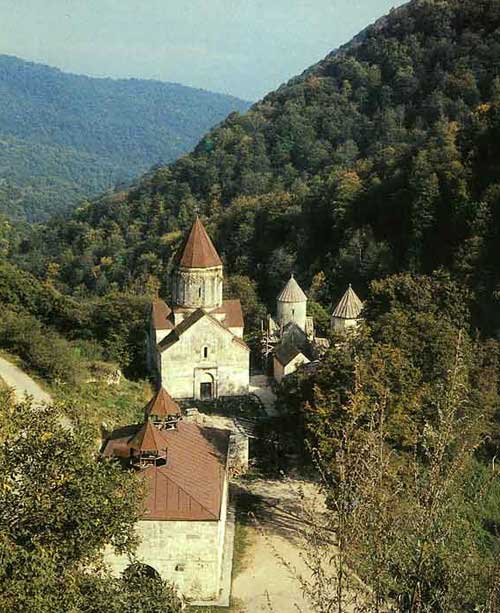
The linguistic composition of the Catacomb culture is unclear. Within the context of the Kurgan hypothesis expounded by Marija Gimbutas, an Indo-European component is hard to deny, particularly in the later stages. Placing the ancestors of the Greek, Armenian and Paleo-Balkan dialects here is tempting, as it would neatly explain certain shared features.

More recently, the Ukrainian archaeologist V. Kulbaka has argued that the Late Yamna cultures of ca. 3200–2800 BC, esp. the Budzhak, Starosilsk, and Novotitarovka groups, might represent the Greek-Armenian-”Aryan”(=Indo-Iranian) ancestors (Graeco-Aryan, Graeco-Armenian), and the Catacomb culture that of the “unified” (to ca. 2500 BC) and then “differentiated” Indo-Iranians.

Grigoryev’s (1998) version of the Armenian hypothesis connects Catacomb culture with Indo-Aryans, because catacomb burial ritual had roots in South-Western Turkmenistan from the early 4th millennium (Parkhai cemetery). The same opinion is supported by Leo Klejn in his various publications.

The centum–satem division is one of many isoglosses of the Indo-European language family, related to the different evolution of the three dorsal consonant rows of the mainstream reconstruction of Proto-Indo-European (PIE).

The terms Centum versus Satem languages is derived from the words for the number “one hundred” in a traditional representative language of each group: Latin centum and Avestan satəm.

The centum group includes Italic, Celtic, Germanic, Hellenic and Tocharian. This group merged PIE palatovelars and plain velars yielding plain velars only, but retain the labiovelars as a distinct set.

The satem languages (which have the sibilant where the centum equivalents have the velar) include Baltic, Slavic, Armenian and Indo-Iranian. This group lose the labial element of the PIE labiovelars and thus merge them with the dorso-velars while the dorso-palatals remain distinct. Balto-Slavic is largely satem but evidences centum development in some words, suggesting that “Satemization” was incomplete. There is residual evidence of various sorts in satem languages of a former distinction between velar and labiovelar consonants.

Recent evidence from Luwian indicates that all three dorsal consonant rows were maintained separately in Proto-Anatolian, and the Centumization observed in Hittite only occurred after the breakup of Common Anatolian.

The isogloss only applies to the parent language with the full inventory of dorsals. Later sound changes within a specific branch of Indo-European that are analogous to one of the centum or satem changes, such as the palatalization of Latin k to s in some Romance languages or the merger of *kʷ with *k in the Goidelic languages, are excluded.
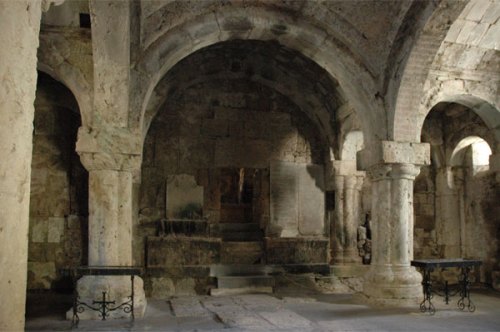
When von Bradke first published his definition of the Centum and Satem Languages, he viewed his classification as “the oldest perceivable division” in Indo-European, which he elucidated as “a division between eastern and western cultural provinces (Kulturkreises).”

This proposed split was undermined by the discoveries of Hittite and Tocharian, which were Centum languages located within the hypothetical Satem range, Tocharian isolated on the Silk Route in the far east, divided from its closest cognates in Europe by thousands of miles of rugged terrain and hostile peoples. This proposed first division based on a single isogloss was further weakened by continued research into additional Indo-European isoglosses, many of which seemed of equal or greater importance in the development of daughter languages.

Philip Baldi explains: “…an early dialect split of the type indicated by the centum-satem contrast should be expected to be reflected in other high-order dialect distinctions as well, a pattern which is not evident from an analysis of shared features among eastern and western languages.”

To this claim one could oppose the example of Old High German and Old Saxon, which, although separated by a drastic consonant shift, stayed almost identical in grammar and syntax for several centuries.

The Centum–Satem isogloss is now understood to be a chronological development of PIE. Centumization removed the palatovelars from the language, leaving none to satemize. In addition there is residual evidence of various sorts in satem languages of a former distinction between velar and labiovelar consonants, indicating the earlier centum state. It is therefore clear that centumization was followed by satemization. However the evidence of Anatolian indicates that centum was not the original state of PIE.

In 1981, Hopper proposed to divide all Indo-European languages into Decem and Taihun groups, according to the pronunciation of the numeral ’10′, by analogy with the Centum-Satem isogloss, which is based on the pronunciation of the numeral ’100′.

The Armenian, Germanic, Anatolian, and Tocharian subfamilies belong to the Taihun group because the numeral ’10′ begins from the voiceless t there. All other Indo-European languages belong to the Decem group because the numeral 10 begins from the voiced d in them. The first group reflects the original state of things, and the second is an innovation.

The Phrygians (Phruges or Phryges) were an ancient Indo-European people, initially dwelling in the southern Balkans; according to Herodotus, under the name of Bryges (Briges), changing it to Phruges after their final migration to Anatolia, via the Hellespont.

From tribal and village beginnings, the state of Phrygia arose in the 8th century BC with its capital at Gordium. During this period, the Phrygians extended eastward and encroached upon the kingdom of Urartu, the descendants of the Hurrians, a former rival of the Hittites.

It was the “Great Mother”, Cybele, as the Greeks and Romans knew her, who was originally worshiped in the mountains of Phrygia, where she was known as “Mountain Mother”.

In her typical Phrygian form, she wears a long belted dress, a polos (a high cylindrical headdress), and a veil covering the whole body. The later version of Cybele was established by a pupil of Phidias, the sculptor Agoracritus, and became the image most widely adopted by Cybele’s expanding following, both in the Aegean world and at Rome. It shows her humanized though still enthroned, her hand resting on an attendant lion and the other holding the tympanon, a circular frame drum, similar to a tambourine.

The Phrygians also venerated Sabazios, the sky and father-god depicted on horseback. Although the Greeks associated Sabazios with Zeus, representations of him, even at Roman times, show him as a horseman god. His conflicts with the indigenous Mother Goddess, whose creature was the Lunar Bull, may be surmised in the way that Sabazios’ horse places a hoof on the head of a bull, in a Roman relief at the Museum of Fine Arts, Boston.
Phrygia developed an advanced Bronze Age culture. The earliest traditions of Greek music derived from Phrygia, transmitted through the Greek colonies in Anatolia, and included the Phrygian mode, which was considered to be the warlike mode in ancient Greek music.

Phrygia retained a separate cultural identity. Classical Greek iconography identifies the Trojan Paris as non-Greek by his Phrygian cap, which was worn by Mithras and survived into modern imagery as the “Liberty cap” of the American and French revolutionaries.

According to Greek mythographers, the first Phrygian Midas had been king of the Moschi (Mushki), also known as Bryges (Brigi) in the western part of archaic Thrace. Assyrian sources from the 8th century BC speak of a king Mita of the Mushki, identified with king Midas of Phrygia. An Assyrian inscription records Mita as an ally of Sargon of Assyria in 709 BC. A distinctive Phrygian pottery called Polished Ware appears in the 8th century BC.

Two different groups are called Muški in the Assyrian sources (Diakonoff 1984:115), one from the 12th to 9th centuries, located near the confluence of the Arsanias and the Euphrates (“Eastern Mushki”), and the other in the 8th to 7th centuries, located in Cappadocia and Cilicia (“Western Mushki”). Assyrian sources identify the Western Mushki with the Phrygians, while Greek sources clearly distinguish between Phrygians and Moschoi.

Identification of the Eastern with the Western Mushki is uncertain, but it is of course possible to assume a migration of at least part of the Eastern Mushki to Cilicia in the course of the 10th to 8th centuries, and this possibility has been repeatedly suggested, variously identifying the Mushki as speakers of a Georgian, Armenian or Anatolian idiom.

According to Professor James R. Russell of Harvard University, the Georgian designation for Armenians Somekhi, preserves the old name of the Mushki.

The Encyclopedia of Indo-European Culture notes that “the Armenians according to Diakonoff, are then an amalgam of the Hurrian (and Urartians), Luvians and the Proto-Armenian Mushki (or Armeno-Phrygians) who carried their IE language eastwards across Anatolia.”

Whether they moved into the core Hittite areas from the east or west has been a matter of some discussion by historians. Some speculate that they may have originally occupied a territory in the area of Urartu; alternatively, ancient accounts suggest that they first arrived from a homeland in the west (as part of the Armeno-Phrygian migration), from the region of Troy, or even from as far as Macedonia, as the Bryges.

Mitanni (Hittite cuneiform KUR URUMi-ta-an-ni, also Mittani Mi-it-ta-ni) or Hanigalbat (Assyrian Hanigalbat, Khanigalbat cuneiform Ḫa-ni-gal-bat) was an Hurrian-speaking state in northern Syria and south-east Anatolia from ca. 1500 BC–1300 BC.

Founded by an Indo-Aryan ruling class governing a predominately Hurrian population, Mitanni came to be a regional power after the Hittite destruction of Amorite Babylon, and a series of ineffectual Assyrian kings created a power vacuum in Mesopotamia.

Some theonyms, proper names and other terminology of the Mitanni exhibit close similarities to Indo-Aryan, suggesting that an Indo-Aryan elite imposed itself over the Hurrian population in the course of the Indo-Aryan expansion. In a treaty between the Hittites and the Mitanni, the deities Mitra, Varuna, Indra, and Nasatya (Ashvins) are invoked.

Kikkuli’s horse training text includes technical terms such as aika (eka, one), tera (tri, three), panza (pancha, five), satta (sapta, seven), na (nava, nine), vartana (vartana, turn, round in the horse race). The numeral aika “one” is of particular importance because it places the superstrate in the vicinity of Indo-Aryan proper as opposed to Indo-Iranian or early Iranian (which has “aiva”) in general.

“This kingdom was known as the Maryannu, Nahrin or Mitanni to the Egyptians, Hurri to the Hittites and Hanigalbat to the Assyrians. All three names were equivalent and interchangeable”, asserted Michael C. Astour.

Hittite annals mention a people called Hurri (Ḫu-ur-ri), located in northeastern Syria. A Hittite fragment, probably from the time of Mursili I, mentions a “King of the Hurri”, or “Hurrians”. The Assyro-Akkadian version of the text renders “Hurri” as Hanigalbat. Tushratta, who styles himself “king of Mitanni” in his Akkadian Amarna letters, refers to his kingdom as Hanigalbat.

Egyptian sources call Mitanni “nhrn”, which is usually pronounced as Naharin/Naharina from the Assyro-Akkadian word for “river”, cf. Aram-Naharaim.

The name Mitanni is first found in the “memoirs” of the Syrian wars (ca. 1480 BC) of the official astronomer and clockmaker Amememhet, who returned from the “foreign country called Me-ta-ni” at the time of Thutmose I. The expedition to the Naharina announced by Thutmosis I at the beginning of his reign may have actually taken place during the long previous reign of Amenhotep I. Helck believes that this was the expedition mentioned by Amenhotep II.

In the 14th century BC numerous city-states in northern Syria and Canaan were ruled by persons with Hurrian and some Indo-Aryan names.

The Eastern Muski appear to have moved into Hatti in the 12th century, completing the downfall of the collapsing Hittite state, along with various Sea Peoples. They established themselves in a post-Hittite kingdom in Cappadocia.

In the 8th century, Tabal became the most influential of the post-Hittite polities, and the Mushki under Mita entered an anti-Assyrian alliance with Tabal and Carchemish. The alliance was soon defeated by Sargon of Assyria, who captured Carchemish and drove back Mita to his own province. Ambaris of Tabal was diplomatically married to an Assyrian princess, and received the province of Hilakku, but in 713 BC, Ambaris was deposed and Tabal became an Assyrian province.

In 709, the Mushki re-emerged as allies of Assyria, Sargon naming Mita as his friend. It appears that Mita had captured and handed over to the Assyrians emissaries of Urikki, king of Que, who were sent to negotiate an anti-Assyrian contract with Urartu, as they passed through his territory.

According to Assyrian military intelligence reports to Sargon recorded on clay tablets found in the Royal Archives of Nineveh by Sir Henry Layard, the Cimmerians invaded Urartu from Mannai in 714. From there they turned west along the coast of the Black Sea as far as Sinope, and then headed south towards Tabal, in 705 defeating an Assyrian army in central Anatolia, resulting in the death of Sargon. Macqueen (1986:157) and others have speculated that the Mushki under Mita may have participated in the Assyrian campaign and were forced to flee to western Anatolia, disappearing from Assyrian accounts, but entering the periphery of Greek historiography as king Midas of Phrygia.

Rusas II of Urartu in the 7th century fought the Mushki-ni to his west, before he entered an alliance with them against Assyria.

Pliny in the 1st century AD mentions the Moscheni in southern Armenia (“Armenia” at the time stretching south and west to the Mediterranean, bordering on Cappadocia). In Byzantine historiography, Moschoi was a name equivalent to or considered as the ancestors of “Cappadocians” (Eusebius) with their capital at Mazaca (later Caesarea Mazaca, modern Kayseri).

Little is known of what happened to the region of Urartu under the foreign rule following its fall. The most widely accepted theory is that settlers related to Phrygians, or more specifically tribes speaking a proto-Armenian language conventionally named Armeno-Phrygians, who had already settled in the western parts of the region prior to the establishment of Urartu, had become the ruling elite under the Medes, followed by the Achaemenid Persians.

These Armeno-Phrygians, referred to as Armenians as of now, would have mingled with the disparate peoples of Urartu, resulting a fusion of languages and cultures.

The Armenians multiplied in numbers and spread their language throughout the territory of Urartu. The Urartians, during its dominance, had amalgamated disparate tribes, each of which had its own culture and traditions. Thus, when the political structure was destroyed, little remained that could be identified as one unified Urartian culture.

The region formerly known as Urartu became an Achaemenid satrapy called Armina, which later became an independent kingdom called Armenia. The Urartians who were in the satrapy were then assimilated, becoming part of the Armenian ethnogenesis.

However, other Urartians might have kept their former identity. According to Herodotus, the Alarodians (Alarodioi)—believed to be Urartian remnants—were part of the 18th Satrapy of the Achaemenid Empire and formed a special contingent in the grand army of Xerxes I. Some Urartian traditions, such as architecture and dam constructions, were absorbed in the following Persianates, and most probably persisted in the Satrapy of Armina.

Urartu did not give birth to a direct successor, however, the Satrapy of Armina, as an entity which emerged immediately after its fall, inherited its cultural, traditional, geographical and some linguistic aspects.

Darius I the Great, in his famous Behistun Inscription, calls the region Armina/Armenia in Old Persian and Urashtu/Urartu in Babylonian, clearly equating the two, suggesting that both are somewhat part of a same continuous entity. As the Armenian identity developed in the region, the memory of Urartu faded and finally disappeared.

http://en.wikipedia.org/wiki/Armenian_hypothesis

Armenian language

http://en.wikipedia.org/wiki/Armenian_language

Proto-Armenian language

http://en.wikipedia.org/wiki/Proto-Armenian

Phrygian language

http://en.wikipedia.org/wiki/Phrygian_language

Armeno-Phrygian

http://en.wikipedia.org/wiki/Armeno-Phrygian

Graeco-Armenian (also Helleno-Armenian)

http://en.wikipedia.org/wiki/Graeco-Armenian

Graeco-Aryan (or Graeco-Armeno-Aryan)

http://en.wikipedia.org/wiki/Graeco-Armeno-Aryan

Western Armenian

http://en.wikipedia.org/wiki/Western_Armenian_language

Eastern Armenian

http://en.wikipedia.org/wiki/Eastern_Armenian_language

Homshetsi dialect

http://en.wikipedia.org/wiki/Homshetsi_dialect

CULTURES

Shulaveri-Shomu culture

http://en.wikipedia.org/wiki/Shulaveri-Shomu_culture

Kura–Araxes culture

http://en.wikipedia.org/wiki/Kura%E2%80%93Araxes_culture

Trialeti culture

http://en.wikipedia.org/wiki/Trialeti_culture

Mitanni

http://en.wikipedia.org/wiki/Mitanni

Urartu

http://en.wikipedia.org/wiki/Urartu

History of Chechnya

http://en.wikipedia.org/wiki/History_of_Chechnya

Publisert i Uncategorized | Legg igjen en kommentar »

The Aryan Root of Ancient Egypt

Skrevet av Fredsvenn den mai 16, 2013

File:Falun Gong Logo.svg

Swastika – Tao

The Tocharians, an indoeuropean group which doesn’t any longer exists, went from their homeland in Caucasus to China for around 5.000 years ago. They opened the Silk road, and introduced both Taosism and copper. They spread Buddhism, but also Taoism, which is two local variations of our religion. Both of these religions use the Swastika, which is a persian word and means well-being. It is about living in peace with your self and in harmony with rest of the universe.

In Armenia swastika is called “vardan“, “arevakhach” and “ker khach” and is the ancient symbol of eternal light (i.e. God). Swastikas in Armenia were founded on petroglyphs. Among the oldest petroglyphs is the seventh letter of the Armenian alphabet – “E” (which means “is” or “to be”) – depicted as half-swastika. Swastikas can also be seen on early Medieval churches and fortresses, including the principal tower in Armenia’s historical capital city of Ani. The same symbol can be found on Armenian carpets, cross-stones (khachkar) and in medieval manuscripts.

The world oldest swastika was found from a burial site of a hunting culture, worlds earliest temple Gobekli Tepe was created by non-porcelain, non-agricultural hunter gatherer people, likely also nomadic. However the earlist porcelain and agricultural people did not creat meaningful symbols or temples, implying the agricultural people lacked organizational trait. The hunter gatherers, later to become the first agroculturalists, from Near East, especially Anatolia, the Armenian Highland, were the first nomads, they are the root of world civilization. These people are still around, some migrated to Europe, settling in Africa, Europe and Asia, mixing with locals there. The descendents of nomadic heritage can be proud of it.

The archeological founds in the Halaf culture in the Armenian Highland shares similarities with Indian ones. The Mitanni language, which is a very archaic Indo-Iranian language (older and more archaic than old Avestan and Rigvedic and which according to Indo-European linguists forms a fifth independant Indo-Iranian group – oldest swastika( 6000-5000 B.C) in a Hurrian city. In fact the Hurrians and the Aryans (Armenians) established Mitanni, later Ur-Ar-at (Ararat) and then Armenia. While the Aryans became Armenians, the Hurrians became the Kurds (Iranian speaking).

“There may have been later “Taoists”, or interpreters of Taoism, that thought differently, but they do not conform to the teachings of Lao Tzu, and K’ung-fu-tzu and the other authors of the I Ching. The Tao is the same as God, the God of Abraham, Isaac, Jacob, and Jesus although the ancient Chinese sages did not know of these individuals. The brilliance of Taoism is the way that they conceived of God, which is not contrary to the Bible, but complementary to it. And yes, God is everything. There is only one Substance out of which everything is made, including thought, and it is called the Tao, or God.”

The earliest Swastika known has been found from Mezine, Ukraine. It is carved on late paleolithic figurine of mammoth ivory, being dated as early as about 10,000 BC. It has been suggested this Swastika is a stylized picture of a stork in flight. Aragil or Stork – considered as the messenger of Ara the Beautiful, as well as the defender of fields. According to ancient mythological conceptions, two stork symbolize the sun. Ara ‘Ara the Beautiful’is the god of spring, flora, agriculture, sowing and water. He is associated with Osiris, Vishnu and Dionysus, as the symbol of new life.

Pharaoh Thutmose III of Egypt in the 33rd year of his reign (1446 BC) mention the people of Ermenen, and says in their land “heaven rests upon its four pillars”.

Inanna

Inanna & Ishtar

Inanna has a central role in the myth of Enmerkar and the Lord of Aratta. A major theme in the narrative is the rivalry between the rulers of Aratta and Uruk for the heart of Inanna. Ultimately, this rivalry results in natural resources coming to Uruk and the invention of writing.

The goddess Inanna resides in Aratta, but Enmerkar of Uruk pleases her more than does the lord of Aratta, who is not named in this epic. Enmerkar wants Aratta to submit to Uruk, bring stones down from the mountain, craft gold, silver and lapis lazuli, and send them, along with “kugmea” ore to Uruk to build a temple. Inana bids him send a messenger to Aratta, who ascends and descends the “Zubi” mountains, and crosses Susa, Anshan, and “five, six, seven” mountains before approaching Aratta. Aratta in turn wants grain in exchange. However Inana transfers her allegiance to Uruk, and the grain gains the favor of Aratta’s people for Uruk, so the lord of Aratta challenges Enmerkar to send a champion to fight his champion. Then the god Ishkur makes Aratta’s crops grow.

Inanna can be considered the most prominent female deity in ancient Mesopotamia. As early as the Uruk period (ca. 4000–3100 BC), Inanna was associated with the city of Uruk. The famous Uruk Vase (found in a deposit of cult objects of the Uruk III period) depicts a row of naked men carrying various objects, bowls, vessels, and baskets of farm produce, and bringing sheep and goats, to a female figure facing the ruler. This figure was ornately dressed for a divine marriage, and attended by a servant. The female figure holds the symbol of the two twisted reeds of the doorpost, signifying Inanna behind her, while the male figure holds a box and stack of bowls, the later cuneiform sign signifying En, or high priest of the temple. Especially in the Uruk period, the symbol of a ring-headed doorpost is associated with Inanna.

Seal impressions from the Jemdet Nasr period (ca. 3100–2900 BC) show a fixed sequence of city symbols including those of Ur, Larsa, Zabalam, Urum, Arina, and probably Kesh. It is likely that this list reflects the report of contributions to Inanna at Uruk from cities supporting her cult. A large number of similar sealings were found from the slightly later Early Dynastic I phase at Ur, in a slightly different order, combined with the rosette symbol of Inanna, that were definitely used for this purpose. They had been used to lock storerooms to preserve materials set aside for her cult. Inanna’s primary temple of worship was the Eanna, located in Uruk (c.f. Worship).

Inanna’s name derives from Queen of Heaven (Sumerian: nin-anna). The Cuneiform sign of Inanna; however, is not a ligature of the signs lady (Sumerian: nin) and sky (Sumerian: an). These difficulties have led some early Assyriologists to suggest that originally Inanna may have been a Proto-Euphratean goddess, possibly related to the Hurrian mother goddess Hannahannah, accepted only latterly into the Sumerian pantheon, an idea supported by her youthfulness, and that, unlike the other Sumerian divinities, at first she had no sphere of responsibilities. The view that there was a Proto-Euphratean substrate language in Southern Iraq before Sumerian is not widely accepted by modern Assyriologists.

Royal seal of Šauštatar of Mitanni (Aryans)

Frieze with Lion-Headed Eagle (Ninhursag) and Stags, copper, Temple at Tell al-Ubaid, 2500 BCE, h: 1.07 from the Early Dynastic – Southern Mesopotamian Period, 2900 BCE – 2350 BCE – Found in Ubaid. This copper frieze was found in the temple at Ubaid, presumably to be placed over the doorway. It represents the storm-god Ninhursag (lady of the mountain), shown as a lion-headed eagle grasping two stags with her great talons. The panel has been cast in high relief, with the heads of the three beasts cast separately. Note that the head of the eagle breaks out of the border of the frieze.

In Sumerian mythology, Ninhursag or Ninkharsag was the mountain and mother goddess, one of the seven great deities of Sumer. She is principally a fertility goddess. She was the earth and mother-goddess she usually appears as the sister of Enlil. Temple hymn sources identify her as the ‘true and great lady of heaven’ and kings of Sumer were ‘nourished by Ninhursag’s milk’.

She is typically depicted wearing a horned head-dress and tiered skirt, often with bow cases at her shoulders, and not infrequently carries a mace or baton surmounted by an omega motif or a derivation, sometimes accompanied by a lion cub on a leash. She is the tutelary deity to several Sumerian leaders.

Nin-hursag means “lady of the sacred mountain” and «Lady of the Foothills» (from Sumerian NIN “lady” and ḪAR.SAG “sacred mountain, foothill”).

She had many names including Dingirmah («Lady of the Gods»), Ninmah (“Great Queen”); Nintu (“Lady of Birth”); Mamma or Mami (mother); Aruru probably connected with Homeric arura (arable land, land generally). As wife of Enki she was usually called Damgalnunna. In Akkadian she was Belit-ili (lady of the Gods), and Mama and as wife to Ea, Enki’s Akkadian counterpart, she was usually called Damkina.

Her prestige decreased as Ishtar’s increased, but her aspect as Damkina mother of Marduk, the supreme god of Babylonia, still held a secure place in the pantheon.

According to legend her name was changed from Ninmah to Ninhursag by her son Ninurta in order to commemorate his creation of the mountains. As Ninmenna, according to a Babylonian investiture ritual, she placed the golden crown on the king in the Eanna temple.

Some of the names above were once associated with independent goddesses (such as Ninmah and Ninmenna), who later became identified and merged with Ninhursag, and myths exist in which the name Ninhursag is not mentioned.

In union with Enki she also bore Ninsar, goddess of the pasture. She was the chief nurse, the one in charge of medical facilities. In that role that the Goddess was called NINTI (lady-life). She was considered the Mother Goddess. She was nicknamed ‘Mammu’ – now called ‘mother’ ‘mom’.

Ninhursag bore a male child to Enlil. His name was NIN.UR.TA (lord who completes the fountain). He was the son who to do battle for his father using bolts of lightening.

In the legend of Enki and Ninhursag, Ninhursag bore a daughter to Enki called Ninsar (“Lady Greenery”). Through Enki, Ninsar bore a daughter Ninkurra. Ninkurra, in turn, bore Enki a daughter named Uttu. Enki then pursued Uttu, who was upset because he didn’t care for her. Uttu, on her ancestress Ninhursag’s advice buried Enki’s seed in the earth, whereupon eight plants (the very first) sprung up. Enki, seeing the plants, ate them, and became ill in eight organs of his body. Ninhursag cured him, taking the plants into her body and giving birth to eight deities: Abu, Nintulla (Nintul), Ninsutu, Ninkasi, Nanshe (Nazi), Azimua, Ninti, and Enshag (Enshagag).

In the text ‘Creator of the Hoe’, she completed the birth of mankind after the heads had been uncovered by Enki’s hoe.

In creation texts, Ninmah (another name for Ninhursag) acts as a midwife whilst the mother goddess Nammu makes different kinds of human individuals from lumps of clay at a feast given by Enki to celebrate the creation of humankind.

Her symbol, the omega Ω, has been depicted in art from around 3000 BC, though more generally from the early second millennium. It appears on some boundary stones — on the upper tier, indicating her importance.

Her temple, the Esagila (from Sumerian E (temple) + SAG (head) + ILA (lofty)) was located on the KUR of Eridu, although she also had a temple at Kish.

In Egypt she played the roles of several creational goddesses – Isis, Maat and Hathor.

Sumerian Gods and Goddesses – Anunnaki

Ninhursag

Winged Ashur is portrayed looking like the Faravahar or Zoroaster (Z).

In Akkadian mythology and Sumerian mythology, Ashur is a sky god – husband of his sister Kishar; their children Lahmu and Lahamu, and the parents of Anu and Ea (and, in some traditions, Enlil). He is sometimes depicted as having Ninlil as a consort. As Anshar, he is progenitor of the Akkadian pantheon; as Ashur, he is the head of the Assyrian pantheon. He led the gods in the war against Tiamat.

Maat

Maat was the goddess of harmony, justice, and truth represented as a young woman, sitting or standing, holding a was scepter, the symbol of power, in one hand and an ankh, the symbol of eternal life, in the other. Sometimes she is depicted with wings on each arm or as a woman with an ostrich feather on her head. Depictions of Maat as a goddess are recorded from as early as the middle of the Old Kingdom (c. 2680 to 2190 BCE).

The earliest evidence for a dedicated temple is in the New Kingdom (c. 1569 to 1081 BCE) era, despite the great importance placed on Maat. Amenhotep III commissioned a temple in the Karnak complex, whilst textual evidence indicates that other temples of Maat were located in Memphis and at Deir el-Medina.

Maat with Ankh

Ankh


Maat wearing feather of truth


Maat or ma’at, also spelled māt or mayet, was the ancient Egyptian concept of truth, balance, order, law, morality, and justice. Maat was also personified as a goddess regulating the stars, seasons, and the actions of both mortals and the deities, who set the order of the universe from chaos at the moment of creation. Her (ideological) counterpart was Isfet.

The earliest surviving records indicating Maat is the norm for nature and society, in this world and the next, were recorded during the Old Kingdom, the earliest substantial surviving examples being found in the pyramid texts of Unas (ca. 2375 BCE and 2345 BCE).

Later, as a goddess in other traditions of the Egyptian pantheon, where most goddesses were paired with a male aspect, her masculine counterpart was Thoth and their attributes are the same. After the rise of Ra they were depicted together in the Solar Barque.

After her role in creation and continuously preventing the universe from returning to chaos, her primary role in Egyptian mythology dealt with the weighing of souls that took place in the underworld, Duat. Her feather was the measure that determined whether the souls (considered to reside in the heart) of the departed would reach the paradise of afterlife successfully.

Pharaohs are often depicted with the emblems of Maat to emphasise their role in upholding the laws of the Creator.

Maat as a principle was formed to meet the complex needs of the emergent Egyptian state that embraced diverse peoples with conflicting interests. The development of such rules sought to avert chaos and it became the basis of Egyptian law. From an early period the King would describe himself as the “Lord of Maat” who decreed with his mouth the Maat he conceived in his heart.

The significance of Maat developed to the point that it embraced all aspects of existence, including the basic equilibrium of the universe, the relationship between constituent parts, the cycle of the seasons, heavenly movements, religious observations and fair dealings, honesty and truthfulness in social interactions.

The ancient Egyptians had a deep conviction of an underlying holiness and unity within the universe. Cosmic harmony was achieved by correct public and ritual life. Any disturbance in cosmic harmony could have consequences for the individual as well as the state. An impious King could bring about famine or blasphemy blindness to an individual. In opposition to the right order expressed in the concept of Maat is the concept of Isfet: chaos, lies and violence.

In addition to the importance of the Maat, several other principles within ancient Egyptian law were essential, including an adherence to tradition as opposed to change, the importance of rhetorical skill, and the significance of achieving impartiality, and social justice. In one Middle Kingdom (2062 to c. 1664 BCE) text the Creator declares “I made every man like his fellow”. Maat called the rich to help the less fortunate rather than exploit them, echoed in tomb declarations: “I have given bread to the hungry and clothed the naked” and “I was a husband to the widow and father to the orphan”.

To the Egyptian mind, Maat bound all things together in an indestructible unity: the universe, the natural world, the state, and the individual were all seen as parts of the wider order generated by Maat.

The underlying concepts of Taoism and Confucianism resemble Maat at times. Many of these concepts were codified into laws, and many of the concepts often were discussed by ancient Egyptian philosophers and officials who referred to the spiritual text known as the Book of the Dead.

There is little surviving literature that describes the practice of ancient Egyptian law. Maat was the spirit in which justice was applied rather than the detailed legalistic exposition of rules (as found in Mosaic law of the 1st millennium BCE). Maat was the norm and basic values that formed the backdrop for the application of justice that had to be carried out in the spirit of truth and fairness. From the 5th dynasty (c. 2510-2370 BCE) onwards the Vizier responsible for justice was called the Priest of Maat and in later periods judges wore images of Maat.

Later scholars and philosophers also would embody concepts from the wisdom literature, or Sebayt. These spiritual texts dealt with common social or professional situations and how each was best to be resolved or addressed in the spirit of Maat. It was very practical advice, and highly case-based, so that few specific and general rules could be derived from them.

During the Greek period in Egyptian history, Greek law existed alongside Egyptian law. The Egyptian law preserved the rights of women who were allowed to act independently of men and own substantial personal property and in time this influenced the more restrictive conventions of the Greeks and Romans. When the Romans took control of Egypt, the Roman legal system which existed throughout the Roman Empire was imposed in Egypt.

Scribes held prestigious positions in ancient Egyptian society in view of their importance in the transmission of religious, political and commercial information.

Thoth was the patron of scribes who is described as the one “who reveals Maat and reckons Maat; who loves Maat and gives Maat to the doer of Maat”. In texts such as the Instruction of Amenemope the scribe is urged to follow the precepts of Maat in his private life as well as his work. The exhortations to live according to Maat are such that these kinds of instructional texts have been described as “Maat Literature”.

The sun-god Ra came from the primaeval mound of creation only after he set his daughter Maat in place of Isfet (chaos). Kings inherited the duty to ensure Maat remained in place and they with Ra are said to “live on Maat”, with Akhenaten (r. 1372-1355 BCE) in particular emphasising the concept to a degree that, John D. Ray asserts, the kings contemporaries viewed as intolerance and fanaticism. Some kings incorporated Maat into their names, being referred to as Lords of Maat, or Meri-Maat (Beloved of Maat). When beliefs about Thoth arose in the Egyptian pantheon and started to consume the earlier beliefs at Hermopolis about the Ogdoad, it was said that she was the mother of the Ogdoad and Thoth the father.

In the Duat, the Egyptian underworld, the hearts of the dead were said to be weighed against her single “Feather of Ma’at”, symbolically representing the concept of Maat, in the Hall of Two Truths. A heart which was unworthy was devoured by the goddess Ammit and its owner condemned to remain in the Duat. The heart was considered the location of the soul by ancient Egyptians. Those people with good and pure hearts were sent on to Aaru. Osiris came to be seen as the guardian of the gates of Aaru after he became part of the Egyptian pantheon and displaced Anubis in the Ogdoad tradition.

The weighing of the heart, pictured on papyrus in the Book of the Dead typically, or in tomb scenes, shows Anubis overseeing the weighing and the lioness Ammit seated awaiting the results so she could consume those who failed. The image would be the vertical heart on one flat surface of the balance scale and the vertical Shu-feather standing on the other balance scale surface. Other traditions hold that Anubis brought the soul before the posthumous Osiris who performed the weighing.

In ancient Egyptian mythology, the fields of Aaru (iArw meaning “reeds”) (alternatives: Yaaru, Iaru, Aalu) or the Egyptian reed fields, are the heavenly paradise, where Osiris ruled after he became part of the Egyptian pantheon and displaced Anubis in the Ogdoad tradition. It has been described as the ka (a part of the soul) of the Nile Delta.

Only souls who weighed exactly the same as the feather of the goddess Ma’at were allowed to start a long and perilous journey to Aaru, where they would exist in pleasure for all eternity. The ancient Egyptians believed that the soul resided in the heart. Those whose heart did not match the weight of the feather of Ma’at due to their sins were excluded. They were said to suffer a second death when devoured by another being, Ammit, while still in Duat for judgment.

The souls who did qualify had to undergo a long journey and face many perils before reaching Aaru. Once they arrived, they had to enter through a series of gates. The exact number of gates varies according to sources, some say 15, some 21. They are however uniformly described as being guarded by evil demons armed with knives.

Aaru usually was placed in the east, where the Sun rises, and is described as eternal reed fields, very much like those of the earthly Nile delta: an ideal hunting and fishing ground, and hence, those deceased who, after judgment, were allowed to reside there, were often called the eternally living. More precisely, Aaru was envisaged as a series of islands, covered in “fields of rushes” (Sekhet Aaru), Aaru being the Egyptian word for rushes. The part where Osiris later dwelt was sometimes known as the “field of offerings”, Sekhet Hetepet in Egyptian.

Maat

Maat

Publisert i Uncategorized | Legg igjen en kommentar »

The Aryan Civilization: Mitanni (Hurri-Aryan – Armenian) – Mitra – Mithraic mysteries

Skrevet av Fredsvenn den mai 16, 2013

-

-

-

File:Bust Attis CdM.jpg

Bust of Attis wearing a Phrygian cap (Parian marble, 2nd century AD).

File:MithraReliefvert.jpg

File:Mithra sacrifiant le Taureau-005.JPG

The Mithraic Mysteries

Nemrut or Nemrud (Turkish: Nemrut Dağı ; Armenian: Նեմրութ լեռ Nemrutʿ leṙ ; Kurdish: Çiyayê Nemrûdê) is a 2,134 m (7,001 ft) high mountain in southeastern Turkey, notable for the summit where a number of large statues are erected around what is assumed to be a royal tomb from the 1st century BC.

The Mithraic Mysteries were a mystery religion practised in the Roman Empire from about the 1st to 4th centuries AD. The name of the Persian god Mithra, adapted into Greek as Mithras, was linked to a new and distinctive imagery. Writers of the Roman Empire period referred to this mystery religion by phrases which can be anglicized as Mysteries of Mithras or Mysteries of the Persians; modern historians refer to it as Mithraism, or sometimes Roman Mithraism. The mysteries were popular in the Roman military.

Worshippers of Mithras had a complex system of seven grades of initiation, with ritual meals. Initiates called themselves syndexioi, those “united by the handshake”. They met in underground temples (called mithraea), which survive in large numbers. The cult appears to have had its centre in Rome.

Numerous archeological finds, including meeting places, monuments, and artifacts, have contributed to modern knowledge about Mithraism throughout the Roman Empire. The iconic scenes of Mithras show him being born from a rock, slaughtering a bull, and sharing a banquet with the god Sol (the Sun). About 420 sites have yielded materials related to the cult. Among the items found are about 1000 inscriptions, 700 examples of the bull-killing scene (tauroctony), and about 400 other monuments.

It has been estimated that there would have been at least 680-690 Mithraea in Rome. No written narratives or theology from the religion survive, with limited information to be derived from the inscriptions, and only brief or passing references in Greek and Latin literature. Interpretation of the physical evidence remains problematic and contested.
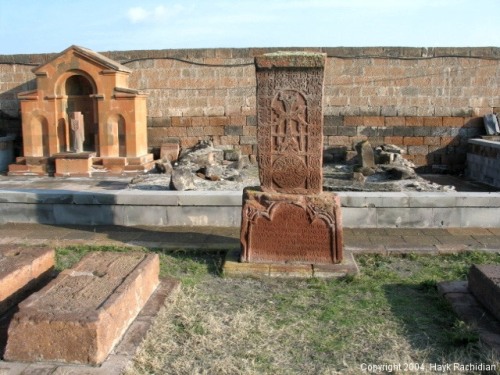
The Romans themselves regarded the mysteries as having Persian or Zoroastrian sources. Since the early 1970s, however, the dominant scholarship has noted dissimilarities between Persian Mithra-worship and the Roman Mithraic mysteries, and the mysteries of Mithras are now generally seen as a distinct product of the Roman Imperial religious world. In this context, Mithraism has sometimes been viewed as a rival of early Christianity.

Beck theorizes that the cult was created in Rome, by a single founder who had some knowledge of both Greek and Oriental religion, but suggests that some of the ideas used may have passed through the Hellenistic kingdoms. He observes that “Mithras — moreover, a Mithras who was identified with the Greek Sun god Helios” was among the gods of the syncretic Greco-Armenian-Iranian royal cult at Nemrut founded by Antiochus I of Commagene in the mid 1st century BC.

Michael Speidel associates Mithras with the Sun god Orion. While proposing the theory, Beck says that his scenario may be regarded as Cumontian in two ways. Firstly, because it looks again at Anatolia and Anatolians, and more importantly, because it hews back to the methodology first used by Cumont.

Antiochus I was the son and probably the only child of King Mithridates I Callinicus and Queen Laodice VII Thea of Commagene. Antiochus was half Armenian, a distant member of the Orontid Dynasty and half Greek. Antiochus’ father Mithridates was the son of King of Commagene Sames II Theosebes Dikaios, while his mother is unknown. Mithridates in descent was related to the kings of Parthia and, according to archaeological research at Mount Nemrut, was also a descendant from the family of King Darius I of Persia.

Sames or Samos II Theosebes Dikaios (Greek: Σάμος Θεοσεβής Δίκαιος – died 109 BC) was the second king of Commagene. Of Armenian descent, he was the son and successor of Ptolemaeus of Commagene.

Mita-nni – Mitra (Jesus)

Maria-nnu – Maria

The ethnicity of the people of Mitanni is difficult to ascertain. A treatise on the training of chariot horses by Kikkuli contains a number of Indo-Aryan glosses. Kammenhuber (1968) suggested that this vocabulary was derived from the still undivided Indo-Iranian language, but Mayrhofer (1974) has shown that specifically Indo-Aryan features are present.

The names of the Mitanni aristocracy frequently are of Indo-Aryan origin, but it is specifically their deities which show Indo-Aryan roots (Mitra, Varuna, Indra, Nasatya), though some think that they are more immediately related to the Kassites.

The common people’s language, the Hurrian language, is neither Indo-European nor Semitic. Hurrian is related to Urartian, the language of Urartu, both belonging to the Hurro-Urartian language family. It had been held that nothing more can be deduced from current evidence. A Hurrian passage in the Amarna letters – usually composed in Akkadian, the lingua franca of the day – indicates that the royal family of Mitanni was by then speaking Hurrian as well.

Some theonyms, proper names and other terminology of the Mitanni exhibit close similarities to Indo-Aryan, suggesting that an Indo-Aryan elite imposed itself over the Hurrian population in the course of the Indo-Aryan expansion. In a treaty between the Hittites and the Mitanni, the deities Mitra, Varuna, Indra, and Nasatya (Ashvins) are invoked.
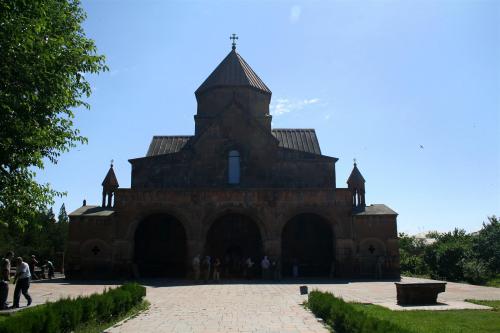
Kikkuli’s horse training text includes technical terms such as aika (eka, one), tera (tri, three), panza (pancha, five), satta (sapta, seven), na (nava, nine), vartana (vartana, turn, round in the horse race). The numeral aika “one” is of particular importance because it places the superstrate in the vicinity of Indo-Aryan proper as opposed to Indo-Iranian or early Iranian (which has “aiva”) in general.

Another text has babru (babhru, brown), parita (palita, grey), and pinkara (pingala, red). Their chief festival was the celebration of the solstice (vishuva) which was common in most cultures in the ancient world. The Mitanni warriors were called marya, the term for warrior in Sanskrit as well; note mišta-nnu (= miẓḍha,~ Sanskrit mīḍha) “payment (for catching a fugitive)” (M. Mayrhofer, Etymologisches Wörterbuch des Altindoarischen< Heidelberg 1986-2000; Vol. II 358).
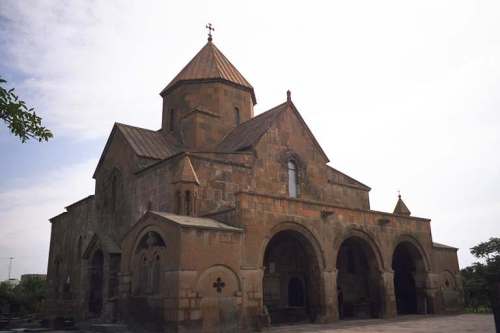
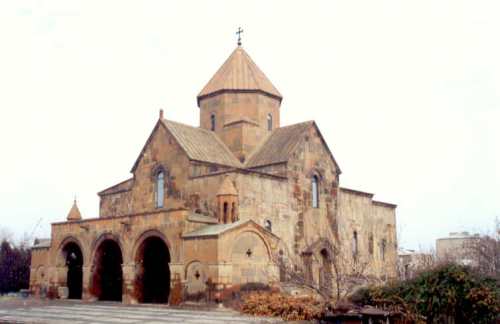
Assyrian sources from the 8th century BC speak of a king Mita of the Mushki, identified with king Midas of Phrygia. An Assyrian inscription records Mita as an ally of Sargon of Assyria in 709 BC. A distinctive Phrygian pottery called Polished Ware appears in the 8th century BC.

The Phrygians founded a powerful kingdom which lasted until the Lydian ascendancy (7th century BC). Under kings alternately named Gordias and Midas, the independent Phrygian kingdom of the 8th and 7th centuries BC maintained close trade contacts with her neighbours in the east and the Greeks in the west. Phrygia seems to have been able to co-exist with whatever power was dominant in eastern Anatolia at the time.

The Encyclopedia of Indo-European Culture notes that “the Armenians according to Diakonoff, are then an amalgam of the Hurrian (and Urartians), Luvians and the Proto-Armenian Mushki (or Armeno-Phrygians) who carried their IE language eastwards across Anatolia.”

Armeno-Phrygian is a term for a minority supported claim of hypothetical people who are thought to have lived in the Armenian Highland as a group and then have separated to form the Phrygians and the Mushki of Cappadocia. It is also used for the language they are assumed to have spoken.

It can also be used for a language branch including these languages, a branch of the Indo-European family or a sub-branch of the proposed Graeco-Armeno-Aryan or Armeno-Aryan branch. Classification is difficult because little is known of Phrygian and virtually nothing of Mushki, while Proto-Armenian forms a subgroup with Hurro-Urartian, Greek, and Indo-Iranian.

Note that the name Mushki is applied to different peoples by different sources and at different times. It can mean the Phrygians (in Assyrian sources) or Proto-Armenians as well as the Mushki of Cappadocia, or all three, in which case it is synonymous with Armeno-Phrygian.

The name Urartu comes from Assyrian sources: the Assyrian King Shalmaneser I (1263–1234 BC) recorded a campaign in which he subdued the entire territory of “Uruatri”. The Shalmaneser text uses the name Urartu to refer to a geographical region, not a kingdom, and names eight “lands” contained within Urartu (which at the time of the campaign were still disunited). The kingdom’s native name was Biainili, also spelt Biaineli, (from which is derived the Armenian toponym “Van”), but prior to the 8th century BC, they also called their now united kingdom “Nairi”.

Scholars such as Carl Friedrich Lehmann-Haupt (1910) believed that the people of Urartu called themselves Khaldini after their god Khaldi. The Nairi, an Iron Age people of the Van area, are sometimes considered related or identical.

In the early 6th century BC, the Urartian Kingdom was replaced by the Armenian Orontid dynasty. In the trilingual Behistun inscription, carved in 521/0 BC by the order of Darius the Great of Persia, the country referred to as Urartu in Assyrian is called Arminiya in Old Persian and Harminuia in Elamite.

Shubria was part of the Urartu confederation. Later, there is reference to a district in the area called Arme or Urme, which some scholars have linked to the name Armenia.

At its apogee, Urartu stretched from the borders of northern Mesopotamia to the southern Caucasus, including present-day Armenia and southern Georgia as far as the river Kura. Archaeological sites within its boundaries include Altintepe, Toprakkale, Patnos and Cavustepe. Urartu fortresses included Erebuni (present day Yerevan city), Van Fortress, Argishtihinili, Anzaf, Cavustepe and Başkale, as well as Teishebaini (Karmir Blur, Red Mound) and others.

Mitanni

Phrygians

Mushki

Armeno-Phrygians

Mount Nemrut

Antiochus I Theos of Commagene

Sames II Theosebes Dikaios

Mithraic mysteries

Mithra the Pagan Christ

Phrygian cap

Publisert i Uncategorized | Legg igjen en kommentar »

5,900-Year-Old Skirt Found In Armenia

Skrevet av Fredsvenn den mai 16, 2013

An Armenian archaeologist says that scientists have discovered a skirt that could be 5,900-year-old.

Pavel Avetisian, the head of the Institute of Archeology and Ethnography in Yerevan, said a fragment of skirt made of reed was found during recent digging in the Areni-1 cave in southeastern Armenia. Avetisian told Tuesday’s news conference in the Armenian capital that the find could be one of the world’s oldest piece of reed clothing.

Earlier excavation in the same location has produced what researchers believe is a 5,500-year-old shoe, making it the oldest piece of leather footwear known to researchers.

Boris Gasparian, an Armenian archaeologist who worked jointly with U.S. and Irish scientists at the site, said they also found a mummified goat that could be 5,900-year-old, or more than 1,000 years older than the mummified animals found in Egypt.

5,900-Year-Old Skirt Found In Armenia

5,900-year-old women’s skirt discovered in Armenian cave

Publisert i Uncategorized | Legg igjen en kommentar »

Origin of the Pashtuns

Skrevet av Fredsvenn den mai 15, 2013

All current Afghans largely share a heritage derived from a common unstructured ancestral population that could have emerged during the Neolithic revolution and the formation of the first farming communities. Our results also indicate that inter-Afghan differentiation started during the Bronze Age, probably driven by the formation of the first civilizations in the region. Later migrations and invasions into the region have been assimilated differentially among the ethnic groups, increasing inter-population genetic differences, and giving the Afghans a unique genetic diversity in Central Asia.

Pashtuns are the largest ethnic group in Afghanistan, accounting for about 42 percent of the population, with Tajiks (27%), Hazaras (9%), Uzbeks (9%), Aimaqs (4%), Turkmen people (3%), Baluch (2%), and other groups (4%) making up the remainder.

Pashtun people (also spelled Pushtun, Pakhtun or Pukhtun), also known as ethnic Afghans or Pathans are an Iranic ethnic group belonging to Afghanistan and Pakistan. They are typically characterised by the usage of the Eastern Iranian Pashto language and practice of Pashtunwali, which is a traditional set of ethics guiding individual and communal conduct. Their origins are unclear but historians have come across references to various ancient peoples called Pakthas (Pactyans) between the 2nd and the 1st millennium BC, inhabiting the region between the Hindu Kush and Indus River, who may be the early ancestors of the Pashtun people. Since the 3rd century AD onward, they have been referred to by the ethnonym “Afghan”.

Early precursors to some of the Pashtuns may have been old Iranian tribes that spread throughout the eastern Iranian plateau. According to the Russian scholar Yu. V. Gankovsky, the Pashtuns probably began as a “union of largely East-Iranian tribes which became the initial ethnic stratum of the Pashtun ethnogenesis, dates from the middle of the first millennium CE and is connected with the dissolution of the Epthalites (White Huns) confederacy.” He proposes Kushan-o-Ephthalite origin for Pashtuns but others draw a different conclusion. According to Abdul Hai Habibi some oriental scholars hold that the second largest Pasthun tribe, the Ghilzais, are the descendants of a mixed race of Hephthalite and Pakhtas who have been living in Afghanistan since the Vedic Aryan period.

In human genetics, Haplogroup G2b-M377 is a Y-chromosome haplogroup and is defined by the presence of the M377 mutation. It is a branch of Haplogroup G, which in turn is defined by the presence of the M201 mutation. G2b is a major Y chromosome haplogroup, and yet unique.It was found among Pashtuns and on much lower scale among all major Jewish groups, Palestinians, Lebanese and Syrians. It appears as if there are a few individuals of Syrian descent that also share this haplogroup. However, their split from the rest of the group should be a minimum of 2,000 years with further testing. It appears as if this group will fall into the G2b2 group and not the G2b1 group with the Pashtuns. The highlands of the Syria could very well be the origin of haplogroup G as a whole due to the diverse G haplogroups seeming to originate there in ancient times.

Haplogroup G-M37

Pashtun people

A rare look at the Y chromosomes of Afghanistan

Publisert i Uncategorized | Legg igjen en kommentar »

The Armenia (Armin and Hay) origin of Brahui (Ab-ra-min) and Bramin (Ab-ra-min)

Skrevet av Fredsvenn den mai 11, 2013


j2

File:Dravidische Sprachen.png


File:UrartuH.jpg

Armin is a given name or surname. It is a Zoroastrian given name, meaning Guardian of Aryan Land, a Persian given name Son of Kavadh, the Legendary character in Shahnameh (King of the books), the character belong to mythical Kianian dynasty, the dynasty that Zoroastrian believes that was exist in ancient times, a Germanic given name, modern form of Arminius, known as Armin or Hermann (Arminius being a Latinization, similar to Brennus), an Ancient Greek given name, modern form of Ariobarzanes meaning “exalting the Aryans”.

The Brahui or Brohi are an ethnic group of about 2.5 million people with the majority found in Sindh and Baluchistan, Pakistan, but they are also found in smaller numbers in neighboring Afghanistan and Iran.

The ethnonym “Brahui” is a very old term and a purely Dravidian one. The fact that other Dravidian languages only exist further south in India has led to several speculations about the origins of the Brahui. There are three hypotheses regarding the Brahui that have been proposed by academics. One theory is that the Brahui are a relic population of Dravidians, surrounded by speakers of Indo-Iranian languages, remaining from a time when Dravidian was more widespread. Another theory is that they migrated to Baluchistan from inner India during the early Muslim period of the 13th or 14th centuries. A third theory says the Brahui migrated to Balochistan from South India after 1000 AD. The absence of any older Iranian (Avestan) influence in Brahui supports this hypothesis. The main Iranian contributor to Brahui vocabulary is a northwestern Iranic language, Baluchi, Sindhi and southeastern Iranic language, Pashto.

The History of the Brahui emerges from total darkness with the displacement of a shadowy Hindu dynasty in Kalat called Sewa by the Mirwari Brahuis. There is a Mughal interlude and then Brahui ascendancy again. It is said that a Hindu dynasty, the Sewa by name, ruled over this part of the country prior to the seventh century, Kalat is still known as Kalat-i-Sewa. Over the centuries, due to their location, the Brahui have mixed with Iranian peoples as well as the Sindhis, among other Indo-Aryan peoples. They culturally resemble their Baloch and Sindhi neighbors, although they still continue to speak their Brahui language.

The Brahui language is a language within the Dravidian subgroup of languages. While it does contain many similar words as the Iranic Baloch language, it also has many loan words from Indo-Aryan languages as well as the Dravidian words of its own. It is mainly spoken in the Kalat areas of Balochistan, Pakistan, although there are a considerable number of speakers in Southern Afghanistan and Iranian Balochistan. It includes three dialects including Sarawani (spoken in the north), Jhalawani (spoken in the southeast), and Chaghi (spoken in the northwest and west).

According to a survey it has about 2,000,000 speakers in Pakistan (1998), 200,000 speakers in Afghanistan and 20,000 speakers in Iran, which would amount to 2,220,000 in the world. Due to its isolation, Brahui’s vocabulary is only 15% Dravidian, while the remainder is dominated by Perso-Arabic, Balochi, and Indo-Aryan, while the grammar and overall morphology still resemble other Dravidian tongues. Brahui is generally written in the Perso-Arabic script and there is even a Latin alphabet that has been developed for use with Brahui.

Brahuis display a variety of Y-DNA haplogroups, the two most important of which being haplogroup R1a – with its mass diffusion among populations of Central/South Asia and associated with the early eastern migrations of Indo-Iranian nomads – and haplogroup J, which, though found among other subcontinental peoples, is nevertheless more typical of Near-Eastern populations. Other, relatively minor, low-frequency haplogroups among the Brahui are those of L, E1b1a, G, and N.

Three of the top four highest frequencies for the partial haplotype J2 fall in the Caucasus. Additional locales in the top ten include Turkey, Iran, Syria, Egypt and Italy. It also occurs in Central Anatolia, among Kurds, and in several samples of obscure populations with a likely Central Asiatic origin – such as the Brahui and Burusho of Northwest Pakistan, and the Csango of Romania, who are thought by many to be of Turkic or Magyar descent.

This match pattern supports the scenario of an origin in Central Asia, with a gradual diffusion into the Middle East and the Mediterranean, and then later into other parts of Europe. This haplotype could easily have come to Britain with Roman conquest or Hellenic exploration, either with Mediterranean merchants, Sarmatian troops or Roman settlers of a variety of ethnicities. There is also the additional possibility that it came to Britain far earlier, with Neolithic agricultural pioneers.

The idea that M172 may have been carried into India with proto-Elamo-Dravidian groups is supported by the frequencies of Haplogroup J in one of the only remaining Dravidian Speaking ethnic groups in the Iranian Plateau, the Brahui. 28% of the Brahui, an ethnic Dravidian speaking group from Western Pakistan were found to carry the mutation defining Haplogroup J.

It appears that Rla, which is found in about 12% of Turks, Kurds and Syrians, did migrate in two different directions – one migration apparently took this group into Europe, particularly Russia, Eastern Europe & Scandinavia, while a second migration route took them into parts of the Caucasus & Middle East.  The domestication of the horse made these large scale migrations possible.

This pattern of haplogroup migrations and associated linguistic connections is supported by the findings of the Brahui people, who reside in central Baluchistan. They are one of the few populations outside India and Sri Lanka that continue to speak a Dravidian-derived language. The Brahui (dravidians) have a very high percentage (55%) of western Eurasian MtDNAs, closely matching populations in Iran and Anatolia.

It is believed the Brahui are the northern survivors of a once vast and ancient Dravidian-speaking region that was later displaced by the Indo-European migrations. While Dravidian languages are primarily confined to the South of India today, there is a striking exception: Brahui (which is spoken in parts of Baluchistan). It has been taken by some as the linguistic equivalent of a relict population, perhaps indicating that Dravidian languages were formerly much more widespread and were supplanted by the incoming Indo-Aryan languages. Certainly some Dravidian place-names are found in now Indo-Aryan regions of central India.

However it has now been demonstrated that the Brahui could only have migrated to Balochistan from central India after 1000 CE. The absence of any older Iranian (Avestan) loanwords in Brahui supports this hypothesis. The main Iranian contributor to Brahui vocabulary, Balochi, is a western Iranian language like Kurdish, and moved to the area from the west only around 1000 CE.

The spread to the East:

Haplogroup J2 is thought to have appeared somewhere in the Middle East towards the end of the last glaciation, between 15,000 and 22,000 years ago. Its present geographic distribution argue in favour of a Neolithic expansion from the Fertile Crescent. This expansion probably correlated with the diffusion of domesticated of cattle and goats (starting c. 8000-9000 BCE) from the Zagros mountains and northern Mesopotamia, rather than with the development of agriculture in the Levant (which seems to have been linked to haplogroup G and perhaps also E1b1b). A second expansion of J2 could have occured with the advent of metallurgy (also from Anatolia and Mesopotamia) and the rise of some of the oldest civilisations.

Quite a few ancient Mediterranean and Middle Eastern civilisations flourished in territories where J2 lineages were preponderant. This is the case of the Hattians, the Hurrians, the Etruscans, the Minoans, the Greeks, the Phoenicians (and their Carthaginian offshoot), the Israelites, and to a lower extent also the Romans, the Assyrians and the Persians. All the great seafaring civilisations from the middle Bronze Age to the Iron Age were dominated by J2 men.

There is a distinct association of ancient J2 civilisations with bull worship. The oldest evidence of a cult of the bull can be traced back to Neolithic central Anatolia, notably at the sites of Çatalhöyük and Alaca Höyük. Bull depictions are omnipresent in Minoan frescos and ceramics in Crete. Bull-masked terracotta figurines and bull-horned stone altars have been found in Cyprus (dating back as far as the Neolithic, the first presumed expansion of J2 from West Asia). The Hattians, Sumerians, Babylonians, Canaaites, and Carthaginians all had bull deities (in contrast with Indo-European or East Asian religions).

The presence of Haplogroup J2 in India, including the subclades M410 and M241 has been an often overlooked clue to the origins of M172. Sengupta et al, in 2005 worked to explain the presence of M172 in India. Their paper provides an immediate acknowledgement of the proposed spread of proto-Elamo-Dravidian speaking peoples into India originating from the Indus Valley and southwest Persia.

The idea that M172 may have been carried into India with proto-Elamo-Dravidian groups is supported by the frequencies of Haplogroup J in one of the only remaining Dravidian Speaking ethnic groups in the Iranian Plateau, the Brahui. 28% of the Brahui, an ethnic Dravidian speaking group from Western Pakistan were found to carry the mutation defining Haplogroup J. Overall Haplogroup J2 in India represented 9.1% of this very populous nation.

In Pakistan, M172 accounted for 11.9% of the Y-Chromosomes typed. Sengupta’s paper broke down the frequencies of Haplogroup J2 into various caste and language groups. J2 was found to be significantly higher among Dravidian castes at 19% than among Indo-European castes at 11%.

J2a-M410 in particular may be a strong candidate for a proposed migration of proto-Dravidian peoples from the Iranian Plateau or the Indus Valley since J2a M410 is a very high component of the haplogroup J2 chromosomes found in Pakistan. Over 71% of the M172 found in Pakistan was M410+.

Another interesting characteristic in the distribution of M172 and more specifically, M410, in India was its higher frequencies in Upper Caste Dravidians. M410+ chromosomes were found in 13% of Upper Caste Dravidians. Sengupta goes on to suggest an Indian origin of Dravidian speakers but from a Y chromosome perspective, the paper seems to acknowledge M172 arriving in India from Middle Eastern and Indus Valley Civilizations.

Despite an apparent exogenous frequency spread pattern of J2a toward North and Central India from the west, it is premature to attribute the spread to a simplistic demic expansion of early agriculturists from the Middle East….it may also reflect subsequent Bronze Age Harappans of uncertain provenance.

Subclades of M172 such as M67 and M92 were not found in either Indian or Pakistani samples which also might hint at a partial common origin. And while there may be multiple events and origins for M172 lineages in India, it does seem likely that the Indus Valley and Elamo-Dravidian speaking groups may be the origin of some of the M172 found in India today.

The sacred bull of Hinduism, Nandi, present in all temples dedicated to Shiva or Parvati, does not have an Indo-European origin, but can be traced back to Indus Valley civilisation. Minoan Crete, Hittite Anatolia, the Levant, Bactria and the Indus Valley also shared a tradition of bull leaping, the ritual of dodging the charge of a bull. It survives today in the traditional bullfighting of Andalusia in Spain and Provence in France, two regions with a high percentage of J2 lineages.

The Indus Valley Civilization (IVC) was a Bronze Age civilization (3300–1300 BCE; mature period 2600–1900 BCE) that was located in the northwestern region of the Indian subcontinent, consisting of what is now mainly present-day Pakistan and northwest India. Flourishing around the Indus River basin, the civilization extended east into the Ghaggar-Hakra River valley and the upper reaches Ganges-Yamuna Doab; it extended west to the Makran coast of Balochistan, north to northeastern Afghanistan and south to Daimabad in Maharashtra. The civilization was spread over some 1,260,000 km², making it the largest known ancient civilization.

The Indus Valley is one of the world’s earliest urban civilizations, along with its contemporaries, Mesopotamia and Ancient Egypt. At its peak, the Indus Civilization may have had a population of well over five million. Inhabitants of the ancient Indus river valley developed new techniques in handicraft (carnelian products, seal carving) and metallurgy (copper, bronze, lead, and tin). The civilization is noted for its cities built of brick, roadside drainage system, and multistoried houses.

The Indus Valley Civilization is also known as the Harappan Civilization, as the first of its cities to be unearthed was located at Harappa, excavated in the 1920s in what was at the time the Punjab province of British India (now in Pakistan). Excavation of Harappan sites has been ongoing since 1920, with important breakthroughs occurring as recently as 1999. There were earlier and later cultures, often called Early Harappan and Late Harappan, in the same area of the Harappan Civilization. The Harappan civilisation is sometimes called the Mature Harappan culture to distinguish it from these cultures. Up to 1999, over 1,056 cities and settlements have been found, out of which 96 have been excavated, mainly in the general region of the Indus and Ghaggar-Hakra river and its tributaries. Among the settlements were the major urban centres of Harappa, Lothal, Mohenjo-daro (UNESCO World Heritage Site), Dholavira, Kalibanga, and Rakhigarhi.

The Harappan language is not directly attested and its affiliation is uncertain since the Indus script is still undeciphered. A relationship with the Dravidian or Elamo-Dravidian language family is favored by a section of scholars.

The IVC has been tentatively identified with the toponym Meluhha known from Sumerian records. It has been compared in particular with the civilizations of Elam (also in the context of the Elamo-Dravidian hypothesis) and with Minoan Crete (because of isolated cultural parallels such as the ubiquitous goddess worship and depictions of bull-leaping). The mature (Harappan) phase of the IVC is contemporary to the Early to Middle Bronze Age in the Ancient Near East, in particular the Old Elamite period, Early Dynastic to Ur III Mesopotamia, Prepalatial Minoan Crete and Old Kingdom to First Intermediate Period Egypt.

After the discovery of the IVC in the 1920s, it was immediately associated with the indigenous Dasyu inimical to the Rigvedic tribes in numerous hymns of the Rigveda. Mortimer Wheeler interpreted the presence of many unburied corpses found in the top levels of Mohenjo-Daro as the victims of a warlike conquest, and famously stated that “Indra stands accused” of the destruction of the IVC. The association of the IVC with the city-dwelling Dasyus remains alluring because the assumed timeframe of the first Indo-Aryan migration into India corresponds neatly with the period of decline of the IVC seen in the archaeological record. The discovery of the advanced, urban IVC however changed the 19th century view of early Indo-Aryan migration as an “invasion” of an advanced culture at the expense of a “primitive” aboriginal population to a gradual acculturation of nomadic “barbarians” on an advanced urban civilization, comparable to the Germanic migrations after the Fall of Rome, or the Kassite invasion of Babylonia. This move away from simplistic “invasionist” scenarios parallels similar developments in thinking about language transfer and population movement in general, such as in the case of the migration of the proto-Greek speakers into Greece, or the Indo-Europeanization of Western Europe.

The Bactria–Margiana Archaeological Complex (or BMAC, also known as the Oxus civilization) is the modern archaeological designation for a Bronze Age civilisation of Central Asia, dated to ca. 2300–1700 BCE, located in present day northern Afghanistan, eastern Turkmenistan, southern Uzbekistan and western Tajikistan, centered on the upper Amu Darya (Oxus River). Its sites were discovered and named by the Soviet archaeologist Viktor Sarianidi (1976). Bactria was the Greek name for the area of Bactra (modern Balkh), in what is now northern Afghanistan, and Margiana was the Greek name for the Persian satrapy of Margu, the capital of which was Merv, in modern-day southeastern Turkmenistan.

Sarianidi’s excavations from the late 1970s onward revealed numerous monumental structures in many sites, fortified by impressive walls and gates. Reports on the BMAC were mostly confined to Soviet journals, until the last years of the Soviet Union, so the findings were largely unknown to the West until Sarianidi’s work began to be translated in the 1990s.

There is archaeological evidence of previous settlement in the well-watered northern foothills of the Kopet Dag from the Neolithic period. This region is dotted with the multi-period tells characteristic of the ancient Near East, similar to those south west of the Kopet Dag in the Gorgan Plain in Iran.

At Jeitun (or Djeitun) mudbrick houses were first occupied c. 6000 cal. BCE. These farming people were herding domesticated goats and sheep and growing wheat and barley, all with origins in South-West Asia. Jeitun has given its name to the whole Neolithic of the northern foothills of the Kopet Dag. At the late Neolithic site of Chagylly Depe, farmers increasingly grew crops associated with irrigation in an arid environment, such as hexaploid bread wheat, which became predominant in the Chalcolithic.

During the Copper Age there was a growth of population in this region. Vadim Mikhaĭlovich Masson, who led the South Turkmenistan Complex Archaeological Expedition from 1946, sees signs of a movement from Central Iran at this time, bringing metallurgy and other innovations, but feels that the newcomers soon blended with the Jeitun farmers. By contrast a re-excavation of Monjukli Depe in 2010 found a distinct break in settlement history between the late Neolithic and early Chalcolithic eras there.

Major Chalcolithic settlements sprang up at Kara-Depe and Namazga-Depe. In addition there were smaller settlements at Anau, Dashlyji and Yassy-depe. Settlements similar to the early level at Anau also appeared further east – in the ancient Delta of the River Tedzen, the site of the Geoksiur Oasis. About 3500 BCE the cultural unity of the culture split into two pottery styles: colourful in the west (Anau, Kara-Depe and Namazga-Depe) and more austere in the east at Altyn-Depe and the Geoksiur Oasis settlements. This may reflect the formation of two tribal groups. Around 3000 BCE it seems that people from Geoksiur migrated into the Murghab Delta, where small, scattered settlements appeared, and reached further east into the Zerafshan Valley in Transoxiana. In both areas pottery typical of Geoksiur was in use. In Transoxiana they settled at Sarazm near Pendjikent. To the south the foundation layers of Shahr-i Shōkhta on the bank of the Helmand River in south-eastern Iran contained pottery of the Altyn-Depe and Geoksiur type. Thus the farmers of Iran, Turkmenistan and Afghanistan were connected by a scattering of farming settlements.

In the Early Bronze Age the culture of the Kopet Dag oases and Altyn-Depe developed a proto-urban society. This corresponds to level IV at Namazga-Depe. Altyn-Depe was a major centre even then. Pottery was wheel-turned. Grapes were grown. The height of this urban development was reached in the Middle Bronze Age c. 2300 BCE, corresponding to level V at Namazga-Depe. It is this Bronze Age culture which has been given the BMAC name.

The inhabitants of the BMAC were sedentary people who practised irrigation farming of wheat and barley. With their impressive material culture including monumental architecture, bronze tools, ceramics, and jewellery of semiprecious stones, the complex exhibits many of the hallmarks of civilization. The complex can be compared to proto-urban settlements in the Helmand basin at Mundigak in western Afghanistan and Shahr-i Shōkhta in eastern Iran, or at Harappa and Mohenjo-daro in the Indus Valley.

Sarianidi regards Gonur as the “capital” of the complex in Margiana throughout the Bronze Age. The palace of North Gonur measures 150 metres by 140 metres, the temple at Togolok 140 metres by 100 metres, the fort at Kelleli 3 125 metres by 125 metres, and the house of a local ruler at Adji Kui 25 metres by 25 metres. Each of these formidable structures has been extensively excavated. While they all have impressive fortification walls, gates, and buttresses, it is not always clear why one structure is identified as a temple and another as a palace. Mallory points out that the BMAC fortified settlements such as Gonur and Togolok resemble the qala, the type of fort known in this region in the historical period. They may be circular or rectangular and have up to three encircling walls. Within the forts are residential quarters, workshops and temples.

Models of two-wheeled carts from c. 3000 BCE found at Altyn-Depe are the earliest complete evidence of wheeled transport in Central Asia, though model wheels have come from contexts possibly somewhat earlier. Judging by the type of harness, carts were initially pulled by oxen, or a bull. However camels were domesticated within the BMAC. A model of a cart drawn by a camel of c. 2200 BCE was found at Altyn-Depe.

The discovery of a single tiny stone seal (known as the “Anau seal”) with geometric markings from the BMAC site at Anau in Turkmenistan in 2000 led some to claim that the Bactria-Margiana complex had also developed writing, and thus may indeed be considered a literate civilization. It bears five markings strikingly similar to Chinese “small seal” characters, but such characters date from the Qin reforms of roughly 100 AD, while the Anau seal is dated by context to 2,300 BCE. It is therefore an unexplained anomaly. The only match to the Anau seal is a small jet seal of almost identical shape from Niyä (near modern Minfeng) along the southern Silk Road in Xinjiang, assumed to be from the Western Han dynasty.

BMAC materials have been found in the Indus civilisation, on the Iranian plateau, and in the Persian Gulf. Finds within BMAC sites provide further evidence of trade and cultural contacts. They include an Elamite-type cylinder seal and an Harappan seal stamped with an elephant and Indus script found at Gonur-depe. The relationship between Altyn-Depe and the Indus Valley seems to have been particularly strong. Among the finds there were two Harappan seals and ivory objects. The Harappan settlement of Shortugai in Northern Afghanistan on the banks of the Amu Darya probably served as a trading station.

There is evidence of sustained contact between the BMAC and the Eurasian steppes to the north, intensifying c. 2000 BCE. In the delta of the River Amu Darya where it reaches the Aral Sea, its waters were channeled for irrigation agriculture by people whose remains resemble those of the nomads of the Andronovo Culture. This is interpreted as nomads settling down to agriculture, after contact with the BMAC. The culture they created is known as Tazabag’yad. About 1800 BCE the walled BMAC centres decreased sharply in size. Each oasis developed its own types of pottery and other objects. Also pottery of the Andronovo-Tazabag’yab culture to the north appeared widely in the Bactrian and Margian countryside. Many BMAC strongholds continued to be occupied and Andronovo-Tazabagyab coarse incised pottery occurs within them (along with the previous BMAC pottery) as well as in pastoral camps outside the mudbrick walls. In the highlands above the Bactrian oases in Tajikistan, kurgan cemeteries of the Vaksh and Bishkent type appeared with pottery that mixed elements of the late BMAC and Andronovo-Tazabagyab traditions.

As argued by Michael Witzel and Alexander Lubotsky, there is a proposed substratum in Proto-Indo-Iranian which can be plausibly identified with the original language of the BMAC. Moreover, Lubotsky points out a larger number of words apparently borrowed from the same language, which are only attested in Indo-Aryan and therefore evidence of a substratum in Vedic Sanskrit. Some BMAC words have now also been found in Tocharian. Michael Witzel points out that the borrowed vocabulary includes words from agriculture, village and town life, flora and fauna, ritual and religion, so providing evidence for the acculturation of Indo-Iranian speakers into the world of urban civilization.

Archaeological cultures associated with Indo-Iranian migrations (after EIEC). The Andronovo, BMAC and Yaz cultures have often been associated with Indo-Iranian migrations. The GGC, Cemetery H, Copper Hoard and PGW cultures are candidates for cultures associated with Indo-Aryan migrations.

The Bactria-Margiana complex has attracted attention as a candidate for those looking for the material counterparts to the Indo-Iranians, a major linguistic branch that split off from the Proto-Indo-Europeans. Sarianidi himself advocates identifying the complex as Indo-Iranian, describing it as the result of a migration from southeastern Iran. Bactrian Margiana material has been found at Susa, Shahdad, and Tepe Yahya in Iran, but Lamberg-Karlovsky does not see this as evidence that the complex originated in southeastern Iran. “The limited materials of this complex are intrusive in each of the sites on the Iranian Plateau as they are in sites of the Arabian peninsula.”

Western archaeologists are more inclined to see the culture as begun by farmers in the Near Eastern Neolithic tradition, but infiltrated by Indo-Iranian speakers from the Andronovo culture in its late phase, creating a hybrid. In this perspective, Proto-Indo-Aryan developed within the composite culture before moving south into the Indian subcontinent. As James P. Mallory phrased it

It has become increasingly clear that if one wishes to argue for Indo-Iranian migrations from the steppe lands south into the historical seats of the Iranians and Indo-Aryans that these steppe cultures were transformed as they passed through a membrane of Central Asian urbanism. The fact that typical steppe wares are found on BMAC sites and that intrusive BMAC material is subsequently found further to the south in Iran, Afghanistan, Nepal, India and Pakistan, may suggest then the subsequent movement of Indo-Iranian-speakers after they had adopted the culture of the BMAC.

However, eminent archaeologists like B. B. Lal have seriously questioned the BMAC and Indo-Iranian connection, and thoroughly disputed the proclaimed relations.

While others maintain there is insufficient evidence for any ethnic or linguistic identification of the BMAC solely based on material remains, in the absence of written records.

Vedic Sanskrit has a number of linguistic features which are alien to most other Indo-European languages. Prominent examples include: phonologically, the introduction of retroflexes, which alternate with dentals; morphologically, the formation of gerunds; and syntactically, the use of a quotative marker (“iti”). Such features, as well as the presence of non-Indo-European vocabulary, are attributed to a local substratum of languages encountered by Indo-Aryan peoples in Central Asia and within the Indian subcontinent.

A substantial body of loanwords has been identified in the earliest Indian texts. Non-Indo-Aryan elements (such as -s- following -u- in Rigvedic busa) are clearly in evidence. While some loanwords are from Dravidian, and other forms are traceable to Munda[2] or Proto-Burushaski, the bulk have no sensible basis in any of these families, suggesting a source in one or more lost languages. The discovery that some loan words from one of these lost sources had also been preserved in the earliest Iranian texts, and also in Tocharian convinced Michael Witzel and Alexander Lubotsky that the source lay in Central Asia and could be associated with the Bactria–Margiana Archaeological Complex (BMAC). Another lost language is that of the Indus Valley Civilization, which Witzel initially labelled Para-Munda, but later the Kubhā-Vipāś substrate.

Retroflex phonemes are now found throughout the Burushaski, Nuristani, Dravidian and Munda families. They are reconstructed for proto-Burushaski, proto-Dravidian and (to a minimal extent) for proto-Munda, and are thus clearly an areal feature of the Indian subcontinent. They are not reconstructible for either Proto-Indo-European or Proto-Indo-Iranian, and they are also not found in Mitanni-Indo-Aryan loan words.

The acquisition of the phonological trait by early Indo-Aryan is thus unsurprising, but it does not immediately permit identification of the donor language. Since the adoption of a retroflex series does not affect poetic meter, it is impossible to say if it predates the early portions of the Rigveda or was a part of Indo-Aryan when the Rigvedic verses were being composed; however, it is certain that at the time of the redaction of the Rigveda (ca. 500 BC), the retroflex series had become part of Sanskrit phonology. There is a clear predominance of retroflexion in the Northwest (Nuristani, Dardic, Khotanese Saka, Burushaski), involving affricates, sibilants and even vowels (in Kalasha), compared to other parts of the subcontinent. It has been suggested that this points to the regional, northwestern origin of the phenomenon in Rigvedic Sanskrit.

Bertil Tikkanen is open to the idea that various syntactical developments in Indo-Aryan could have been the result of adstratum rather than the result of substrate influences. However Tikkanen states that “in view of the strictly areal implications of retroflexion and the occurrence of retroflexes in many early loanwords, it is hardly likely that Indo-Aryan retroflexion arose in a region that did not have a substratum with retroflexes.”

In 1955 Burrow listed some 500 words in Sanskrit that he considered to be loans from non-Indo-European languages. He noted that in the earliest form of the language such words are comparatively few, but they progressively become more numerous. Though mentioning the likelihood that one source was lost Indian languages extinguished by the advance of Indo-Aryan, he concentrated on finding loans from Dravidian. Kuiper identified 383 specifically Ṛgvedic words as non-Indo-Aryan — roughly 4% of its vocabulary. Oberlies prefers to consider 344-358 “secure” non-Indo European words in the Rigveda. Even if all local non-Indo-Aryan names of persons and places are subtracted from Kuiper’s list, that still leaves some 211-250 “foreign” words, around 2% of the total vocabulary of the Rigveda.

These loanwords cover local flora and fauna, agriculture and artisanship, terms of toilette, clothing and household. Dancing and music are particularly prominent, and there are some items of religion and beliefs. They only reflect village life, and not the intricate civilization of the Indus cities, befitting a post-Harappan time frame. In particular Indo-Aryan words for plants stem in large part from other language families, especially from the now lost substrate languages.

Mayrhofer identified a “prefixing” language as the source of many non-Indo-European words in the Rigveda, based on recurring prefixes like ka- or ki-, that have been compared by Michael Witzel to the Munda prefix k- for designation of persons, and the plural prefix ki seen in Khasi, though he notes that in Vedic, k- also applies to items merely connected with humans and animals.

Witzel remarks that these words span all of local village life. He considers that they were drawn from the lost language of the northern Indus Civilization and its Neolithic predecessors. As they abound in Austroasiatic-like prefixes, he initially chose to call it Para-Munda, but later the Kubhā-Vipāś substrate.

The Indo-Europeanist and Indologist Thieme has questioned Dravidian etymologies proposed for Vedic words, most of which he gives Indo-Aryan or Sanskrit etymologies, and condemned what he characterizes as a misplaced “zeal for hunting up Dravidian loans in Sanskrit”. Das even contended that there is “not a single case” in which a communis opinio has been found confirming the foreign origin of a Rigvedic word”. Kuiper answered that charge. Burrow in turn has criticized the “resort to tortuous reconstructions in order to find, by hook or by crook, Indo-European explanations for Sanskrit words”. Kuiper reasons that given the abundance of Indo-European comparative material — and the scarcity of Dravidian or Munda — the inability to clearly confirm whether the etymology of a Vedic word is Indo-European implies that it is not.

Colin Masica could not find etymologies from Indo-European or Dravidian or Munda or as loans from Persian for 31 percent of agricultural and flora terms of Hindi. He proposed an origin in unknown Language “X”. Southworth also notes that the flora terms did not come from either Dravidian or Munda. Southworth found only five terms which are shared with Munda, leading to his suggestion that “the presence of other ethnic groups, speaking other languages, must be assumed for the period in question”.

Terms borrowed from an otherwise unknown language include those relating to cereal-growing and bread-making (bread, ploughshare, seed, sheaf, yeast), water-works (canal, well), architecture (brick, house, pillar, wooden peg), tools or weapons (axe, club), textiles and garments (cloak, cloth, coarse garment, hem, needle) and plants (hemp, cannabis, mustard, Soma plant). Lubotsky pointed out that the phonological and morphological similarity of 55 loanwords in Proto-Indo-Iranian and in Sanskrit indicates that a substratum of Indo-Iranian and a substratum of Indo-Aryan represent the same language, or perhaps two dialects of the same language. He concludes that the language of the original population of the towns of Central Asia, where Indo-Iranians must have arrived in the second millennium BCE, and the language spoken in Punjab (see Harappan below) were intimately related. However an alternative interpretation is that 55 loanwords entered common Proto-Indo-Iranian during its development in the Sintashta culture in distant contact with the Bactria–Margiana Archaeological Complex, and then many more words with the same origin enriched Old Indic as it developed among pastoralists who integrated with and perhaps ruled over the declining BMAC.

Witzel initially used the term “Para-Munda” to denote a hypothetical language related but not ancestral to modern Munda languages, which he identified as “Harappan”, the language of the Indus Valley Civilization. To avoid confusion with Munda, he later opted for the term “Kubhā-Vipāś substrate”. He argues that the Rigveda shows signs of this hypothetical Harappan influence in the earliest level and Dravidian only in later levels, suggesting that speakers of Harappan were the original inhabitants of Punjab and that the Indo-Aryans encountered speakers of Dravidian not before middle Rigvedic times. Krishnamurti deems the evidence too meagre for this proposal. Regarding Witzel’s methodology in claiming Para-Munda origins, Krishnamurti states: “The main flaw in Witzel’s argument is his inability to show a large number of complete, unanalyzed words from Munda borrowed into the first phase of the Ṛgveda. This statement, however, confuses Proto-Munda and Para-Munda and neglects the several hundred “complete, unanalyzed words” from a prefixing language, adduced by Kuiper and Witzel.

A concern raised in the identification of the substrate is that there is a large time gap between the comparative materials, which can be seen as a serious methodological drawback. One issue is the early geographical distribution of the South Asian languages. It should not be assumed that the present-day northern location of Brahui, Kurukh, and Malto reflects the position of their ancestor languages at the time of Indo-Aryan development. Another problem is that modern literary languages may present a misleading picture of their prehistoric ancestors. The first completely intelligible, datable, and sufficiently long and complete epigraphs that might be of some use in linguistic comparison are the Tamil inscriptions of the Pallava dynasty of about 550 C.E. and the early Tamil Brahmi inscriptions starting in the second century BC. Similarly there is much less material available for comparative Munda and the interval in their case is at least three millennia. However reconstructions of Proto-Dravidian and Proto-Munda now help in distinguishing the traits of these languages from those of Indo-European in the evaluation of substrate and loan words.

A concern raised in the identification of the substrate is that there is a large time gap between the comparative materials, which can be seen as a serious methodological drawback. One issue is the early geographical distribution of the South Asian languages. It should not be assumed that the present-day northern location of Brahui, Kurukh, and Malto reflects the position of their ancestor languages at the time of Indo-Aryan development. Another problem is that modern literary languages may present a misleading picture of their prehistoric ancestors. The first completely intelligible, datable, and sufficiently long and complete epigraphs that might be of some use in linguistic comparison are the Tamil inscriptions of the Pallava dynasty of about 550 C.E. and the early Tamil Brahmi inscriptions starting in the second century BCE. Similarly there is much less material available for comparative Munda and the interval in their case is at least three millennia.

However reconstructions of Proto-Dravidian and Proto-Munda now help in distinguishing the traits of these languages from those of Indo-European in the evaluation of substrate and loan words.

There are an estimated thirty to forty Dravidian loanwords in Vedic. Those for which Dravidian etymologies are certain include kulāya “nest”, kulpha “ankle”, daṇḍa “stick”, kūla “slope”, bila “hollow”, khala “threshing floor”. However Witzel finds Dravidian loans only from the middle Rigvedic period, suggesting that linguistic contact between Indo-Aryan and Dravidian speakers only occurred as the Indo-Aryans expanded well into and beyond the Punjab.

While Dravidian languages are primarily confined to the South of India today, there is a striking exception: Brahui (which is spoken in parts of Baluchistan). It has been taken by some as the linguistic equivalent of a relict population, perhaps indicating that Dravidian languages were formerly much more widespread and were supplanted by the incoming Indo-Aryan languages. Certainly some Dravidian place-names are found in now Indo-Aryan regions of central India. However it has now been demonstrated that the Brahui could only have migrated to Balochistan from central India after 1000 CE. The absence of any older Iranian (Avestan) loanwords in Brahui supports this hypothesis. The main Iranian contributor to Brahui vocabulary, Balochi, is a western Iranian language like Kurdish, and moved to the area from the west only around 1000 CE.

As noted above, retroflex phonemes in early Indo-Aryan cannot identify the donor language as specifically Dravidian. Krishnamurti argues the Dravidian case other features: “Besides, the Ṛg Veda has used the gerund, not found in Avestan, with the same grammatical function as in Dravidian, as a non-finite verb for ‘incomplete’ action. Ṛg Vedic language also attests the use of iti as a quotative clause complementizer.” However, such features are also found in the indigenous Burushaski language of the Pamirs and cannot be attributed only to Dravidian influence on the early Rigveda.

Post-Vedic words such as nāraṅgaḥ “orange” (first attested in the Sushruta Samhita, ca. 4th century AD) are often taken to be straightforward loans from Dravidian into Sanskrit. Since they belong to a later period, they are unsuited to establish the origin of the loans in Rigvedic Sanskrit.

Kuiper identified one of the donor languages to Indo-Aryan as Proto-Munda. Munda linguist Gregory D. Anderson states: “It is surprising that nothing in the way of quotations from a Munda language turned up in (the hundreds and hundreds of) Sanskrit and middle-Indic texts. There is also a surprising lack of borrowings of names of plants/animal/bird, etc. into Sanskrit (Zide and Zide 1976). Much of what has been proposed for Munda words in older Indic (e.g. Kuiper 1948) has been rejected by careful analysis. Some possible Munda names have been proposed, for example, Savara (Sora) or Khara, but ethnonymy is notoriously messy for the identification of language groups, and a single ethnonym may be adopted and used for linguistically rather different or entirely unrelated groups”.

Publisert i Uncategorized | Legg igjen en kommentar »

Armenian dance:

Skrevet av Fredsvenn den april 19, 2013

-

-

-

-

-

Publisert i Uncategorized | Legg igjen en kommentar »

 
Følg med

Få nye innlegg levert til din innboks.